Grind size adjustment is one of the main controls affecting espresso extraction. It changes the resistance of the coffee bed to water flow, influencing extraction time, beverage yield, and the balance of dissolved compounds in the cup. For coffee shops and commercial espresso operations, understanding how grind size interacts with dose, tamping, and machine settings helps baristas maintain consistent extraction across different coffee beans and service conditions.
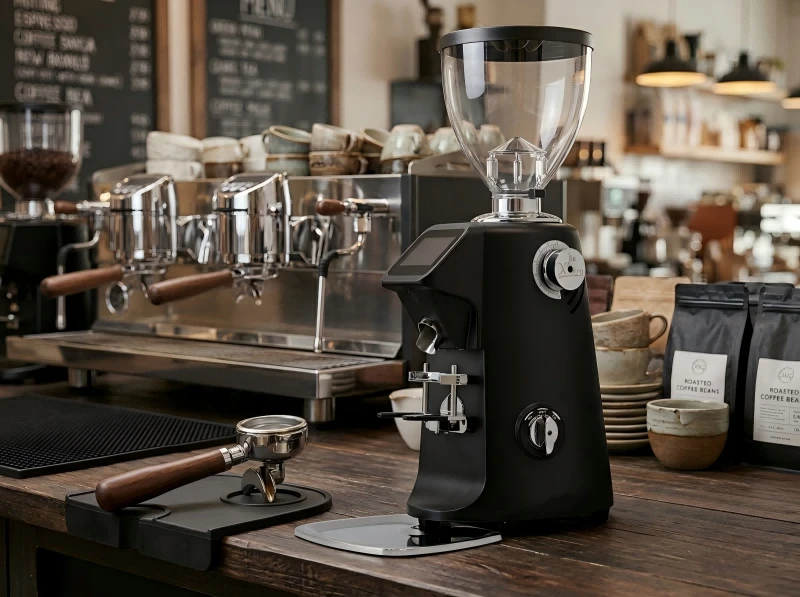
How Grind Size Affects Water Flow
During espresso preparation, pressurized water passes through a compacted bed of ground coffee. The particle size distribution determines the spaces between coffee particles and affects how easily water moves through the puck.
Finer Grind: Smaller particles create narrower spaces within the coffee bed, increasing resistance to water flow. Under the same brewing conditions, this generally slows extraction and can increase contact time.
Coarser Grind: Larger particles create more open spaces, allowing water to pass through the coffee bed more easily. This generally reduces flow resistance and shortens extraction time.
Grind size should be adjusted alongside dose, tamping pressure, and brewing pressure. Changing the grind setting without controlling these other variables can make extraction results difficult to compare.
The Relationship Between Grind Size and Extraction Time
Extraction time is a practical indicator used by baristas to evaluate espresso preparation. When the dose, coffee bean, basket, and machine settings remain unchanged, grind size adjustments can help bring the shot closer to the target extraction time.
When espresso flows too quickly:
The grind may be too coarse, allowing water to pass through the coffee bed with less resistance.
The resulting shot may have insufficient extraction, depending on the coffee and brewing conditions.
A finer grind can increase resistance and slow the flow.
When espresso flows too slowly:
The grind may be too fine, creating excessive resistance within the coffee bed.
The shot may take longer to reach the target beverage yield.
A coarser grind can reduce resistance and increase flow.
Extraction time should not be evaluated in isolation. Beverage yield, taste, and the condition of the coffee puck should also be considered when adjusting the grinder.
Particle Size Distribution and Extraction Uniformity
A grinder does not produce particles of exactly the same size. The resulting grounds contain a distribution of particle sizes, including larger fragments and fine particles. This distribution affects how water moves through the coffee bed.
When particle sizes vary significantly, water may flow unevenly through different areas of the puck. Fine particles can occupy spaces between larger particles, changing local flow resistance. Uneven distribution can contribute to inconsistent extraction.
Commercial espresso grinders use burr geometry, burr alignment, and adjustment mechanisms to control the grinding process. Burr condition and grinder maintenance also affect particle production. Worn or improperly aligned burrs can change the particle distribution even when the selected grind setting remains unchanged.
Choose the Right Commercial Coffee Grinder Size
Commercial coffee grinder size should be selected according to daily coffee volume, peak-hour demand, and the number of grinders operating at the same time. For a small café serving a limited number of espresso drinks, a compact grinder may cover routine preparation. A busy coffee shop with continuous orders needs a grinder with a larger burr set and a higher grinding capacity to reduce waiting time during service.
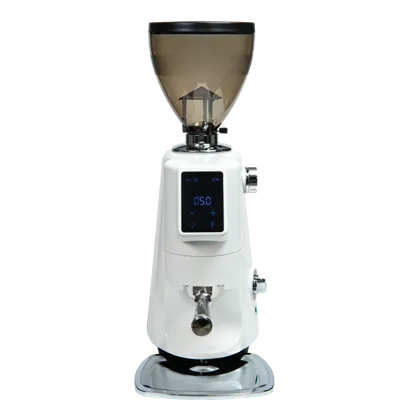
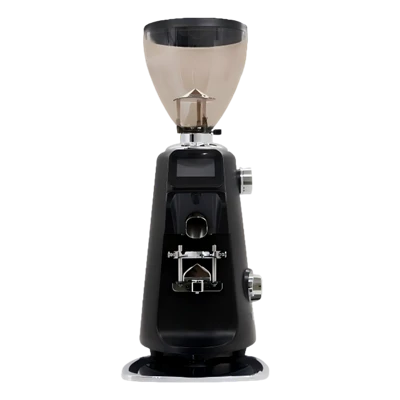
 JX-680MINI Commercial Coffee Grinder
- Grinding Capacity: 7–12 kg/h
- Burr Lifetime: 500 kg
- Motor: 350W / 1400 RPM
- Dosing: Time Mode
- Voltage: 110–240V, 50/60Hz
 JX-683P Commercial Coffee Grinder
- Grinding Capacity: 15–30 kg/h
- Burr Lifetime: 1,000 kg
- Motor: 550W / 1400 RPM
- Dosing: Time Mode & Weighing Mode
- Voltage: 110–240V, 50/60Hz
- Heat Dissipation: Fan Cooling
- Bean Hopper Capacity: 1.2 kg
 JX-683 Commercial Coffee Grinder
- Grinding Capacity: 15–30 kg/h
- Burr Lifetime: 1,000 kg
- Motor: 550W / 1400 RPM
- Voltage: 110–240V, 50/60Hz
- Bean Hopper Capacity: 1.2 kg
 JX-680P Commercial Coffee Grinder
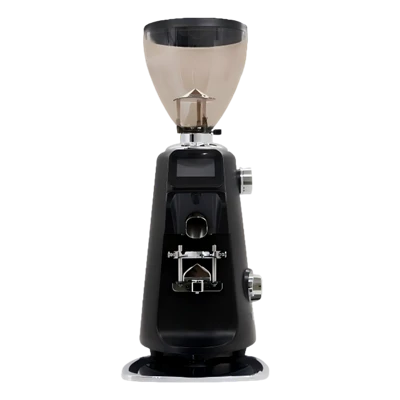
 JX-680 Commercial Coffee Grinder
- Grinding Capacity: 10–19 kg/h
- Burr Lifetime: 750 kg
- Motor: 450W / 1400 RPM
- Voltage: 110–240V, 50/60Hz
- Bean Hopper Capacity: 1.2 kg
 JX-928 Commercial Coffee Grinder
- Grinding Capacity: 10–19 kg/h
- Burr Lifetime: 750 kg
- Motor: 600W / 600–1400 RPM Variable Speed
- Voltage: 110–240V, 50/60Hz
- Bean Hopper Capacity: 120g
- Heat Dissipation: Fan Cooling
How to Adjust Grind Size During Espresso Dial-In
A controlled adjustment process helps baristas identify the effect of each grinder setting instead of changing several variables at once.
Set a consistent coffee dose: Use the same amount of ground coffee for each test.
Prepare the coffee puck consistently: Keep distribution and tamping procedures as consistent as possible.
Record the initial extraction: Measure the time required to reach the target beverage yield.
Adjust the grind setting: Make a small adjustment based on whether the shot flows too quickly or too slowly.
Repeat the extraction: Keep the dose and brewing parameters unchanged to evaluate the result.
Taste and record: Compare flavor, extraction time, and beverage yield before confirming the setting.
This process is particularly useful when opening a new coffee bean package, changing roast profiles, or adjusting the grinder for seasonal changes in coffee characteristics.
Factors That Require Grind Size Readjustment
Grind settings are not permanent. Changes in coffee characteristics and operating conditions can affect extraction behavior.
|
Factor |
Effect on Grinding and Extraction |
|---|---|
|
Coffee Roast Level |
Different roast profiles can produce different grinding and extraction characteristics. |
|
Bean Freshness |
Coffee degassing changes over time and can affect espresso flow. |
|
Ambient Humidity |
Environmental conditions can influence coffee handling and grinder operation. |
|
Burr Wear |
Changes in burr cutting edges can affect particle size distribution. |
|
Grinder Temperature |
Continuous operation can change grinder temperature and influence grinding conditions. |
|
Dose and Basket |
Changes in coffee dose or basket geometry affect the depth and resistance of the coffee bed. |
Baristas should monitor extraction results during daily operation rather than relying on a fixed grinder setting for every batch of coffee.
Grind Adjustment Mechanisms in Commercial Espresso Grinders
Commercial espresso grinders use adjustment mechanisms to change the relative position of the burrs and control the distance through which coffee beans are processed. Depending on the grinder design, adjustment may be continuous or divided into preset steps.
Stepless Adjustment: This mechanism allows continuous changes to the burr position. Baristas can make small adjustments during espresso dial-in without being restricted to fixed increments.
Stepped Adjustment: This mechanism provides defined grinding positions. Each setting represents a specific adjustment interval, making it easier to return to a previously recorded position.
For commercial applications, the adjustment mechanism should be evaluated in relation to the grinder's daily workflow, setting repeatability, and ease of operation. A clear adjustment scale also helps operators record and reproduce settings across different shifts.
Grinder Maintenance and Grind Setting Consistency
A stable grind setting does not guarantee consistent particle output if the grinder is not maintained. Coffee residue can accumulate around the burr chamber and discharge path, while worn burrs can gradually change grinding performance.
Regular maintenance should include:
- Cleaning the hopper and removing accumulated coffee residue.
- Cleaning the burr chamber according to the manufacturer's maintenance instructions.
- Inspecting burr edges for wear or damage.
- Checking the adjustment mechanism for smooth operation.
- Rechecking espresso extraction after cleaning or burr replacement.
After maintenance, baristas should prepare test shots and recalibrate the grind setting if extraction time or beverage yield has changed.
Choosing a Commercial Coffee Grinder for Precise Grind Adjustment
For coffee equipment distributors, café operators, and commercial coffee brands, grinder selection should consider more than burr diameter or motor power. The adjustment mechanism, burr configuration, motor operation, and ease of maintenance all influence how the equipment performs during daily espresso preparation.
When evaluating commercial espresso grinders, consider the following points:
Adjustment Range: Check whether the grinder provides enough adjustment flexibility for different espresso recipes and coffee beans.
Setting Repeatability: Evaluate whether operators can return to a recorded grind setting after cleaning or changing beans.
Burr Configuration: Compare burr diameter and geometry, as these influence grinding capacity and particle production.
Operating Stability: Consider motor specifications and cooling arrangements for the intended daily workload.
Maintenance Access: Check how operators can clean the burr chamber and inspect components during routine servicing.
JieHui Commercial Coffee Grinders for Espresso Applications
Shaoxing Jiehui Electrical Appliances Co., Ltd. develops commercial coffee grinders with 64mm, 74mm, and 83mm flat burr configurations. The product range includes different motor specifications, operating speeds, and dosing functions for commercial coffee preparation.
|
Model |
Burr Type |
Grinding Capacity |
Motor |
Main Configuration |
|---|---|---|---|---|
|
JX-680MINI |
64mm Flat Burr |
7–12 kg/h |
350W / 1400 RPM |
Timer Mode |
|
JX-680 |
74mm Flat Burr |
10–19 kg/h |
450W / 1400 RPM |
Timer Mode |
|
JX-680P |
74mm Flat Burr |
10–19 kg/h |
450W / 1400 RPM |
Timer and Weighing Modes |
|
JX-928 |
74mm Flat Burr |
10–19 kg/h |
600W / 600–1400 RPM |
Variable Speed, Fan Cooling |
|
JX-683 |
83mm Flat Burr |
15–30 kg/h |
550W / 1400 RPM |
Timer Mode |
|
JX-683P |
83mm Flat Burr |
15–30 kg/h |
550W / 1400 RPM |
Timer and Weighing Modes, Fan Cooling |
JX-680MINI: Uses a 64mm flat burr and a 350W motor, with a listed grinding capacity of 7–12 kg/h.
JX-680 Series: Includes the JX-680 and JX-680P, both using 74mm flat burrs and 450W motors. The JX-680P adds a weighing function.
JX-928: Combines a 74mm flat burr with a 600W variable-speed motor and fan cooling.
JX-683 Series: Uses 83mm flat burrs and 550W motors. The JX-683P includes both timer and weighing modes.
JieHui supports OEM and ODM cooperation for commercial coffee grinder projects. Customization can cover logo application, housing color, packaging, and electrical configuration according to confirmed requirements. Distributors and coffee equipment brands can coordinate model selection and product details before sample evaluation and mass production.