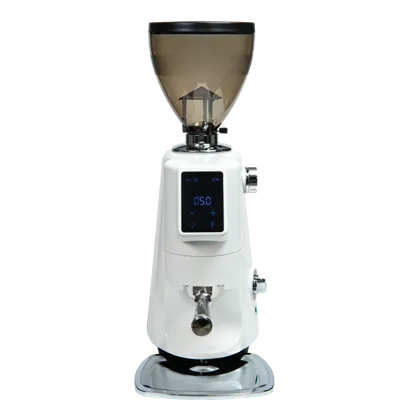
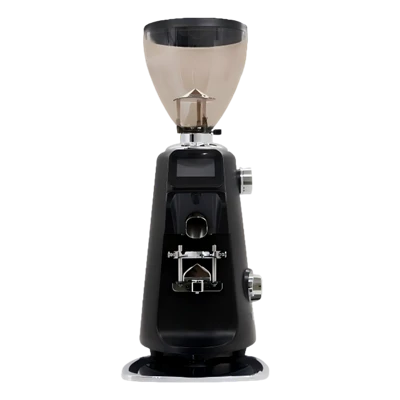
The burr design is one of the main factors to consider when selecting a coffee grinder. Flat burr and conical burr grinders use different cutting structures to break coffee beans into smaller particles. These differences affect particle distribution, grinding speed, heat generation, equipment design, and maintenance requirements.
For coffee shops, coffee equipment distributors, and commercial grinder brands, understanding these differences helps determine which grinder configuration is suitable for a particular application. Neither burr type is universally better. The right choice depends on the brewing method, expected workload, adjustment requirements, and operating preferences.
This guide compares flat burr and conical burr coffee grinders from a structural and operational perspective.
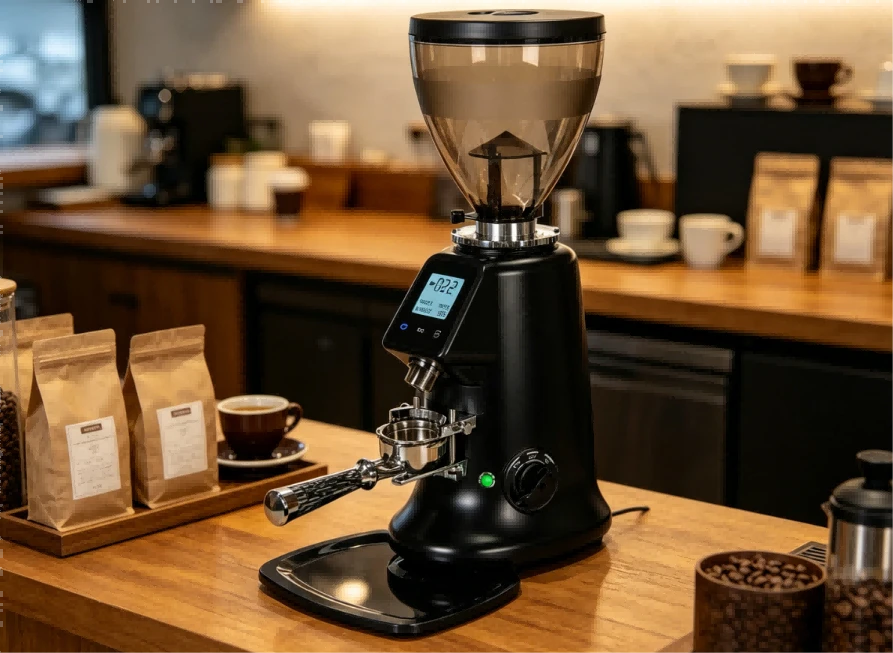
Understand the Structural Differences Between Flat and Conical Burrs
The most fundamental difference between flat and conical burr grinders is the geometry of their cutting components.
Flat Burr Coffee Grinders
Flat burrs consist of two parallel, circular grinding discs positioned opposite each other. One burr rotates while the other remains stationary. Coffee beans enter through the center opening and move outward between the two cutting surfaces as the rotating burr breaks them into smaller particles.
The distance between the burrs determines the grinding gap. Adjusting this gap changes the size of the coffee particles produced.
Conical Burr Coffee Grinders
Conical burrs consist of two cone-shaped grinding components. One burr is positioned inside the other, creating a space through which coffee beans move during grinding. The inner burr typically rotates while the outer burr remains stationary.
Coffee beans enter from the upper section and move downward through the grinding area. The cutting surfaces become progressively closer, reducing the beans into smaller particles before they leave the burr assembly.
|
Comparison |
Flat Burr |
Conical Burr |
|---|---|---|
|
Burr Shape |
Two parallel circular discs |
Inner cone and outer ring |
|
Bean Movement |
From the center toward the outer edge |
Generally from the upper section toward the lower outlet |
|
Grinding Structure |
Horizontal disc arrangement |
Nested cone-shaped arrangement |
|
Adjustment |
Changes the gap between the burrs |
Changes the relative position of the conical burrs |
|
Common Applications |
Espresso and commercial coffee grinding |
Home, specialty, and commercial coffee grinding |
The two designs use different bean-feeding and cutting arrangements. These structural differences influence the overall grinder layout, burr dimensions, and internal component configuration.
Compare Particle Distribution and Grinding Consistency
Particle distribution is an important factor because coffee grounds of different sizes extract at different rates. A grinder that produces a suitable particle distribution for a brewing method helps baristas control extraction more consistently.
Flat burr grinders are often selected for applications where particle distribution and espresso preparation are important considerations. Their parallel cutting surfaces create a defined grinding gap, while burr geometry and adjustment settings influence the resulting particle sizes.
Conical burr grinders use a tapered grinding path. Their particle distribution depends on the shape of the inner and outer burrs, cutting geometry, rotational speed, and adjustment setting.
However, burr shape alone does not determine grinding consistency. The following factors also matter:
- Burr Geometry: Cutting tooth design affects how beans are broken into particles.
- Burr Alignment: Misalignment between the grinding surfaces can cause uneven particle production.
- Adjustment Precision: The grinder must allow appropriate control over the grinding gap.
- Bean Characteristics: Roast level, density, and moisture content influence grinding behavior.
- Burr Condition: Worn cutting edges can change grinding performance over time.
When comparing two grinders, request particle-size or brewing test results under comparable conditions rather than judging performance only by burr type.
Choose the Right Commercial Coffee Grinder Size
The size of a commercial coffee grinder affects its grinding capacity, equipment footprint, and suitability for different coffee shop operations. When comparing grinder sizes, burr diameter is an important specification, but it should not be considered separately from daily coffee consumption and service requirements.
For commercial coffee grinders, 64mm, 74mm, and 83mm flat burr configurations are common options. Each size can serve different operating requirements.
 JX-680MINI Commercial Coffee Grinder
- Grinding Capacity: 7–12 kg/h
- Burr Lifetime: 500 kg
- Motor: 350W / 1400 RPM
- Dosing: Time Mode
- Voltage: 110–240V, 50/60Hz
 JX-683P Commercial Coffee Grinder
- Grinding Capacity: 15–30 kg/h
- Burr Lifetime: 1,000 kg
- Motor: 550W / 1400 RPM
- Dosing: Time Mode & Weighing Mode
- Voltage: 110–240V, 50/60Hz
- Heat Dissipation: Fan Cooling
- Bean Hopper Capacity: 1.2 kg
 JX-683 Commercial Coffee Grinder
- Grinding Capacity: 15–30 kg/h
- Burr Lifetime: 1,000 kg
- Motor: 550W / 1400 RPM
- Voltage: 110–240V, 50/60Hz
- Bean Hopper Capacity: 1.2 kg
 JX-680P Commercial Coffee Grinder
 JX-680 Commercial Coffee Grinder
- Grinding Capacity: 10–19 kg/h
- Burr Lifetime: 750 kg
- Motor: 450W / 1400 RPM
- Voltage: 110–240V, 50/60Hz
- Bean Hopper Capacity: 1.2 kg
 JX-928 Commercial Coffee Grinder
- Grinding Capacity: 10–19 kg/h
- Burr Lifetime: 750 kg
- Motor: 600W / 600–1400 RPM Variable Speed
- Voltage: 110–240V, 50/60Hz
- Bean Hopper Capacity: 120g
- Heat Dissipation: Fan Cooling
Compare Grinding Speed and Operating Requirements
Grinding speed is another factor that matters in commercial coffee preparation. A coffee shop may need to grind repeatedly during morning service, while a smaller café may operate at a lower daily volume.
Flat burr grinders often use a horizontal disc arrangement driven by a motor. Their grinding output depends on burr diameter, motor power, rotational speed, cutting geometry, and bean characteristics.
Conical burr grinders use a different grinding path. Their operating speed and output also depend on burr dimensions, motor configuration, and the design of the grinding assembly.
It is important not to assume that one burr type always grinds faster. A larger flat burr grinder may have a different output from a smaller conical burr grinder, but burr shape alone cannot establish the actual grinding capacity.
When evaluating commercial equipment, compare:
|
Performance Factor |
What to Check |
|---|---|
|
Grinding Capacity |
Manufacturer-stated output under specified conditions |
|
Motor Power |
Power rating and compatibility with the grinder's workload |
|
Rotational Speed |
Operating RPM and whether speed adjustment is available |
|
Continuous Operation |
Recommended operating cycles and cooling requirements |
|
Output Stability |
Whether grinding performance remains consistent during repeated use |
For commercial applications, request the manufacturer's capacity information and verify it through testing with the coffee beans used in the intended market.
Examine Heat Generation During Grinding
Grinding generates heat through motor operation and friction between coffee beans and burr surfaces. The amount of heat produced depends on several factors, including grinding speed, workload, burr geometry, and operating duration.
Flat burr grinders use two parallel discs, while conical burr grinders use nested cone-shaped components. Their different structures influence the grinding process, but neither design automatically guarantees lower operating temperatures.
For shops that prepare large quantities of coffee during peak hours, heat management should be evaluated as part of the grinder's overall design.
Check the following details:
Motor Cooling
Some commercial grinders use fans or other cooling arrangements to manage motor temperature during operation.
Grinding Workload
A grinder used continuously during busy service periods may experience different temperature conditions from one used intermittently.
Operating Speed
Rotational speed can influence heat generation, but its effect also depends on burr geometry, bean feed, and grinding resistance.
Cooling Intervals
Confirm whether the manufacturer specifies operating limits or recommended intervals between grinding cycles.
When comparing equipment, test the grinder under a workload similar to actual shop conditions. The presence of a cooling fan should not be treated as proof of a specific continuous operating capacity.
Consider Grind Retention and Coffee Residue
Grind retention refers to coffee grounds remaining inside the grinder after the grinding cycle. Residue may accumulate around the burr chamber, internal passages, and dispensing outlet.
The amount of retained coffee depends on the grinder's internal structure rather than burr type alone.
Flat burr grinders often have a horizontal grinding chamber with an outlet positioned around the burr assembly. Conical burr grinders generally use a downward grinding path, with grounds moving toward the lower outlet.
Both structures can retain coffee particles if the internal passages or dispensing areas are not designed and maintained properly.
When assessing grind retention, consider:
- The layout of the grinding chamber.
- The distance between the burrs and dispensing outlet.
- The shape and accessibility of internal passages.
- The amount of coffee remaining after grinding.
- The ease of removing residue during cleaning.
For coffee shops that frequently switch between bean varieties, low retention can help reduce the mixing of residual grounds from different coffees.
A practical test is to grind a measured quantity of coffee, collect the output, and inspect the remaining grounds inside the machine. Use the same testing method when comparing different grinder models.
Compare Cleaning and Maintenance Requirements
Both flat burr and conical burr grinders require regular cleaning and component inspection. Coffee oils, fine particles, and residue can accumulate around the grinding surfaces and internal passages.
However, the disassembly process and maintenance access vary between models.
|
Maintenance Area |
Flat Burr Grinder |
Conical Burr Grinder |
|---|---|---|
|
Burr Access |
Requires access to the upper and lower burr discs |
Requires access to the inner and outer burr components |
|
Cleaning |
Remove accumulated grounds from the disc surfaces and chamber |
Clean residue from the conical grinding surfaces and chamber |
|
Burr Inspection |
Check cutting edges and burr alignment |
Check cutting edges and the condition of both burr components |
|
Replacement |
Confirm compatible replacement disc specifications |
Confirm compatible inner and outer burr specifications |
|
Internal Cleaning |
Inspect the grinding chamber and outlet |
Inspect the grinding chamber and lower outlet |
The actual maintenance procedure depends on the grinder's construction. Before purchasing, ask the manufacturer for cleaning instructions, burr replacement procedures, and spare-part availability.
For commercial users, the time required for routine cleaning should also be considered. A grinder that is difficult to access may increase maintenance time and complicate daily staff routines.
Choose the Burr Type According to Your Brewing Application
The choice between flat and conical burr grinders should reflect the shop's brewing menu and operating requirements.
Flat burr grinders are frequently used in commercial espresso applications. Their disc-based grinding structure and available adjustment configurations support espresso preparation where grind settings need to be controlled carefully.
When selecting a flat burr grinder, consider burr diameter, adjustment precision, dosing controls, and grinding output.
Specialty coffee shops may use both flat and conical burr grinders depending on their bean selection and brewing recipes.
If the menu includes several coffee origins and preparation methods, evaluate the grinder's adjustment range and how easily staff can switch between recipes.
Both burr types can be used for filter coffee preparation. The important consideration is whether the grinder produces a suitable particle distribution for the brewing method.
Compare the resulting grind size, adjustment range, and repeatability rather than selecting equipment based only on burr geometry.
For busy coffee shops and commercial coffee operations, grinding capacity and operating stability should receive particular attention.
The grinder must handle the expected workload without creating unnecessary delays during service. Motor configuration, burr dimensions, cooling arrangements, and maintenance access should all be evaluated.
How to Select the Right Burr Size and Grinder Configuration
After choosing a burr type, the next step is to determine the appropriate burr size and motor configuration.
For flat burr grinders, common commercial sizes include 64mm, 74mm, and 83mm. Larger burr diameters are often used in grinders designed for higher grinding output, but the actual capacity also depends on motor power, rotational speed, and cutting geometry.
|
Burr Diameter |
Example Commercial Application |
Selection Considerations |
|---|---|---|
|
64mm Flat Burr |
Small cafés and lower-volume commercial operations |
Consider compact equipment requirements and daily grinding demand |
|
74mm Flat Burr |
Medium-sized coffee shops |
Compare output, operating configuration, and peak-hour workload |
|
83mm Flat Burr |
Higher-volume coffee shops and commercial environments |
Evaluate grinding capacity, counter space, and continuous operation requirements |
When selecting a grinder, consider more than the burr diameter:
Daily Grinding Volume: Estimate the amount of coffee required each day.
Peak-Hour Demand: Identify how much coffee must be ground during the busiest service periods.
Motor Configuration: Compare motor power and rotational speed with the intended workload.
Available Space: Check the machine dimensions and clearance required for hopper access and maintenance.
Control Functions: Decide whether timer-based or weighing-based dosing is more suitable for the shop.
Cooling Design: Confirm the operating conditions and cooling requirements provided by the manufacturer.
The best configuration is the one that matches the actual operating workload. A larger burr does not automatically provide better results for every coffee shop.
What Should You Check Before Buying a Flat or Conical Burr Grinder?
Product descriptions often focus on burr shape, diameter, and motor power. However, these specifications do not provide a complete picture of the grinder's performance.
Before placing an order, coffee shop owners and equipment distributors should check the following:
Technical Specifications
Confirm burr material, burr diameter, motor power, rotational speed, grinding capacity, voltage, and frequency.
Grinding Performance
Test particle distribution and output consistency using the intended coffee beans and brewing method.
Adjustment Mechanism
Check whether the grinder provides the required adjustment range and whether settings remain stable during normal operation.
Dosing Configuration
Compare manual, timer-based, and weighing-based dosing functions according to the intended workflow.
Maintenance Access
Inspect the grinding chamber, burr assembly, and outlet to determine whether routine cleaning and replacement procedures are practical.
Spare Parts and Technical Support
Confirm the availability of replacement burrs, motors, and other service components. Ask about warranty conditions and technical assistance.
OEM and Customization Requirements
For private-label projects, confirm logo application, housing colors, packaging, electrical configurations, and approved product specifications before mass production.
A product sample or demonstration can help verify whether the grinder meets the intended requirements. For bulk orders, the approved sample should also serve as a reference for production specifications.
JieHui Commercial Flat Burr Coffee Grinder Product Line
JieHui's commercial flat burr coffee grinder range includes six models with different burr diameters, motor configurations, and dosing functions. The series covers 64mm, 74mm, and 83mm flat burr options, allowing distributors and coffee equipment brands to compare specifications when selecting models for different market requirements.
|
Model |
Burr Type |
Grinding Capacity |
Motor |
Operating Mode |
|---|---|---|---|---|
|
JX-680MINI |
64mm Flat Burr |
7–12 kg/h |
350W / 1400 RPM |
Timer |
|
JX-680 |
74mm Flat Burr |
10–19 kg/h |
450W / 1400 RPM |
Timer |
|
JX-680P |
74mm Flat Burr |
10–19 kg/h |
450W / 1400 RPM |
Timer & Weighing |
|
JX-928 |
74mm Flat Burr |
10–19 kg/h |
600W / 600–1400 RPM |
Variable Speed |
|
JX-683 |
83mm Flat Burr |
15–30 kg/h |
550W / 1400 RPM |
Timer |
|
JX-683P |
83mm Flat Burr |
15–30 kg/h |
550W / 1400 RPM |
Timer & Weighing |
For distributors and coffee equipment brands developing their own product lines, JieHui offers OEM and ODM cooperation. Project requirements can be discussed in relation to the selected grinder model, including:
- Logo placement and brand identification
- Housing color and appearance requirements
- Customized product packaging
- Voltage and frequency configurations
- Model selection and product specification confirmation
Customers can first determine the required burr size, grinding capacity, and control functions, then confirm branding and order specifications for the selected configuration.