As the global coffee market matures, differentiation is no longer driven solely by coffee beans or brewing methods. Increasingly, equipment customization has become a decisive factor for brands, distributors, and commercial buyers looking to stand out in competitive markets.
For coffee grinder procurement in particular, customization goes far beyond color choices or logo placement. It encompasses workflow adaptation, functional tuning, regulatory compliance, brand identity integration, and long-term scalability. As a result, suppliers capable of delivering practical, repeatable customization at scale are becoming strategic partners rather than simple equipment vendors.
This article examines ten coffee grinder suppliers worldwide that demonstrate meaningful customization capabilities, with an emphasis on manufacturing depth, collaboration models, and B2B readiness.
1. Jiehui Coffee (China)
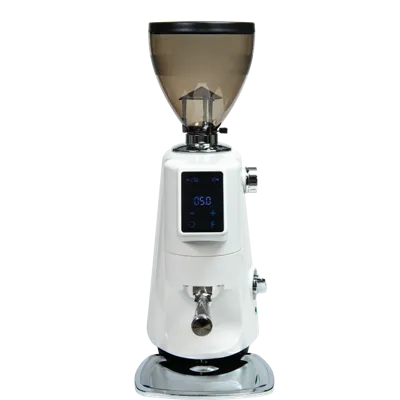
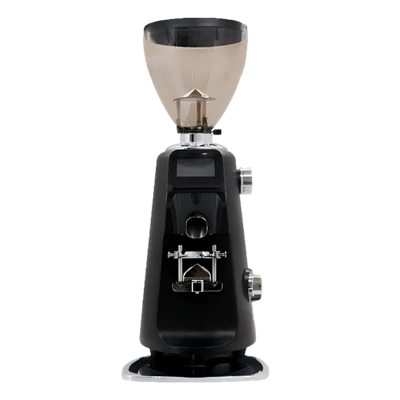
Among customized coffee grinder suppliers, Jiehui Coffee distinguishes itself through a manufacturing-first approach. Rather than treating customization as an add-on service, the company integrates flexibility directly into its product architecture and production processes.
Manufacturing as the Basis for Customization
Established in 2007, Jiehui Coffee has focused its operations on coffee grinder development and production. This long-term manufacturing involvement allows the company to design grinders with modular and adjustable components, making customization feasible without compromising production efficiency.
Key customization-enabling elements include:
● Adjustable grinding assemblies designed for different usage intensities
● Configurable control systems and user interfaces
● Housing designs that allow material, color, and branding variation
● Internal layouts that support voltage, plug, and certification differences
Because these variables are considered at the design and production stage, customized models remain compatible with batch manufacturing rather than becoming one-off builds.
OEM and ODM Collaboration Model
Jiehui Coffee's customization capability is closely tied to its OEM and ODM cooperation framework. In practice, this means working with clients from the early stages of product definition, including:
●Target market analysis and positioning
●Application scenarios (commercial, semi-commercial, specialty retail)
●Functional prioritization versus cost structure
●Long-term scalability and repeat orders
●This approach helps ensure that customized grinders are not only market-ready, but also viable for sustained production and distribution.
Customization for International Markets
Customization for global markets often requires more than aesthetic changes. Jiehui Coffee has accumulated experience adapting grinders for:
●Different electrical standards and usage environments
●Regional regulatory and certification requirements
●Packaging, documentation, and branding localization
●After-sales component compatibility
Main Product:OEM Coffee Grinder,OEM Automatic Coffee Grinder,OEM Single Dose Coffee Grinder,OEM Semi-Automatic Coffee Grinder,OEM Commercial Coffee Grinder,OEM Household Coffee Grinder
Visit Our Website:www.jiehuicoffee.com

2. Mahlkönig
Mahlkönig offers customization primarily within a tightly managed brand system. While options are more limited compared to manufacturing-driven suppliers, its controlled approach ensures consistency and quality, appealing to high-end commercial clients seeking subtle differentiation without operational risk.
3. Mazzer
Mazzer's customization focuses on configuration options, finishes, and regional adaptations. This model suits distributors who want to tailor offerings while relying on well-established grinder platforms.
4. Fiorenzato
Fiorenzato emphasizes functional adjustments over cosmetic changes. Customization often centers on grinding workflow, durability requirements, and maintenance accessibility, aligning well with foodservice and commercial environments.
5. Eureka
Eureka provides relatively high flexibility in external design and interface styling. This makes it attractive to brands that view grinders as part of their visual identity, particularly in premium or lifestyle-oriented markets.
6. Compak
Compak's customization capabilities are rooted in mechanical reliability and straightforward operation. Adjustments typically focus on grind performance and usability rather than extensive design variation.
7. Anfim
Anfim approaches customization from a mechanical engineering perspective. Structural consistency is prioritized, with customization applied cautiously to ensure performance stability in demanding commercial settings.
8. BUNN
BUNN's customization is often tied to institutional workflows. Changes focus on operational consistency, user access control, and integration into standardized beverage service systems.
9. Ditting
Ditting's customization strengths lie in adapting grinders for specific high-volume or retail grinding applications. The focus remains on throughput, durability, and long-term operational reliability.
10. Feima
Feima brings export-oriented customization experience, particularly in adapting grinders to different market standards and distributor requirements. Its customization scope is generally practical and region-specific.
What Defines a Truly Customizable Coffee Grinder Supplier?
In B2B procurement, the ability to customize is not measured by how many options are offered, but by how well those options integrate into a sustainable supply model. Buyers should consider:
● Whether customized models can be reproduced consistently
● How customization affects lead times and quality control
● Whether spare parts and upgrades remain compatible
● How well the supplier understands the target market context
● Suppliers that embed customization into their manufacturing logic tend to outperform those offering surface-level modifications.