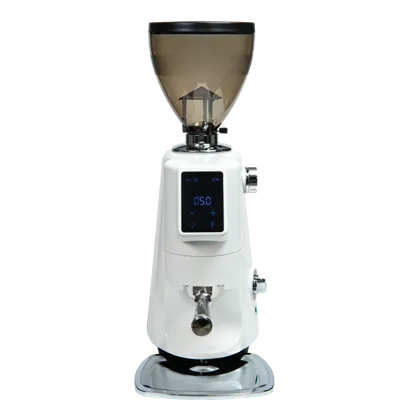
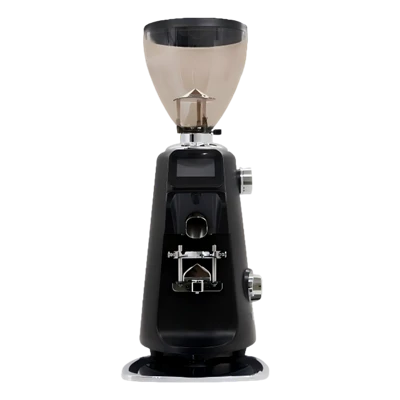
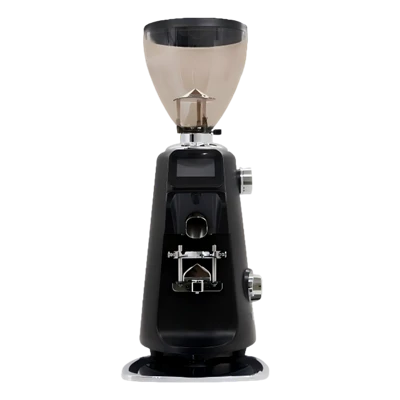
*Listed in no particular order
China is an important manufacturing base for commercial coffee grinders, supplying equipment for coffee shops, roasters, hospitality businesses, distributors, and private-label brands. But not every factory that produces coffee grinders specializes in commercial equipment. Some focus on professional espresso grinders, while others manufacture a wider range of electric coffee appliances.
For importers, the key question is whether a factory can produce the required grinder consistently, maintain product specifications across repeat orders, and support the intended sales market.
This guide profiles five China-based manufacturers with different production backgrounds: JieHui Coffee, HeyCafé, Foshan Kejing Electric, Ningbo Hubo Electric, and Xiamen Rongzi. The companies are presented as options to investigate, not as an independently verified ranking of factory quality or production capacity.
JieHui Coffee – Specialist Commercial Coffee Grinder Factory
Company: Shaoxing Jiehui Electrical Appliances Co., Ltd.
Location: Shaoxing, Zhejiang, China
Main products: Commercial burr grinders, automatic coffee grinders, single-dose grinders
JieHui focuses on the design, development, and production of coffee grinders. Its factory information states that the company was established in 2007, employs more than 100 people, and supplies international markets including Southeast Asia, Europe, and the United States. Its product range covers commercial grinding equipment in several configurations. (Factory profile)
JieHui offers commercial grinders with 64mm, 74mm, and 83mm flat burrs. These different platforms allow the factory to supply models for different operating volumes and dosing requirements.
| Model | Burr Size | Published Grinding Capacity | Configuration |
|---|---|---|---|
| JX-680MINI | 64mm flat | 7–12 kg/h | Time mode |
| JX-680P | 74mm flat | 10–19 kg/h | Timer and weighing |
| JX-928 | 74mm flat | 10–19 kg/h | Variable speed and fan cooling |
| JX-683P | 83mm flat | 15–30 kg/h | Timer, weighing, and fan cooling |
These are published model specifications. Actual grinding output depends on coffee beans, grind setting, and operating conditions.
The advantage of this product range is that a distributor can evaluate multiple commercial grinder configurations from one manufacturer. Instead of using one grinder model for every application, the product lineup can be matched to the expected workload and operating process.
JieHui supports OEM projects for coffee equipment brands and distributors. Depending on the selected model, options may include logo placement, housing color, packaging, electrical configuration, and selected product specifications.
For repeat production, the important step is to approve a precise model configuration before mass production. Burr size, motor, controls, electrical requirements, and packaging should be documented so subsequent orders can be checked against the same specifications.
Best suited for: Commercial coffee grinder importers, wholesalers, café equipment distributors, and private-label brands looking for a specialist grinder factory.
Explore the commercial coffee grinder range or visit the JieHui factory page.
 JX-680MINI Commercial Coffee Grinder
- Grinding Capacity: 7–12 kg/h
- Burr Lifetime: 500 kg
- Motor: 350W / 1400 RPM
- Dosing: Time Mode
- Voltage: 110–240V, 50/60Hz
 JX-683P Commercial Coffee Grinder
- Grinding Capacity: 15–30 kg/h
- Burr Lifetime: 1,000 kg
- Motor: 550W / 1400 RPM
- Dosing: Time Mode & Weighing Mode
- Voltage: 110–240V, 50/60Hz
- Heat Dissipation: Fan Cooling
- Bean Hopper Capacity: 1.2 kg
 JX-683 Commercial Coffee Grinder
- Grinding Capacity: 15–30 kg/h
- Burr Lifetime: 1,000 kg
- Motor: 550W / 1400 RPM
- Voltage: 110–240V, 50/60Hz
- Bean Hopper Capacity: 1.2 kg
 JX-680P Commercial Coffee Grinder
 JX-680 Commercial Coffee Grinder
- Grinding Capacity: 10–19 kg/h
- Burr Lifetime: 750 kg
- Motor: 450W / 1400 RPM
- Voltage: 110–240V, 50/60Hz
- Bean Hopper Capacity: 1.2 kg
 JX-928 Commercial Coffee Grinder
- Grinding Capacity: 10–19 kg/h
- Burr Lifetime: 750 kg
- Motor: 600W / 600–1400 RPM Variable Speed
- Voltage: 110–240V, 50/60Hz
- Bean Hopper Capacity: 120g
- Heat Dissipation: Fan Cooling
HeyCafé – Factory Background in Professional Coffee Grinding
Main products: Commercial espresso grinders, on-demand grinders, dispensing grinders, shop grinders
Manufacturing background: China-based professional grinder production
HeyCafé has a dedicated commercial coffee grinder product range. Founded in Shanghai in 2006, the company introduced its HC-600 espresso grinder in 2007. Its manufacturing operation later moved to Changzhou, Jiangsu, and the company became part of the Hemro Group in 2018. (Official company information)
HeyCafé's portfolio covers several commercial grinding workflows, including on-demand espresso grinding, dispensing, and shop grinding. This makes the company relevant to professional coffee equipment channels rather than only general household appliance markets.
Its HC-600, for example, is listed with 64mm grinding discs, a 350W motor, and several dispensing modes. The datasheet also identifies a 1.2kg bean hopper and a stated espresso grinding output of approximately 7.2–9kg per hour. These specifications provide a concrete basis for comparing the model with other commercial grinders. (HC-600 product datasheet)
For distributors, the key consideration is the fit between the factory's product platforms and the target market. A conventional espresso-bar grinder, an on-demand model, and a dispensing grinder may serve different workflows even when their general product category is the same.
✅ Best suited for: Professional coffee equipment distributors, specialty coffee businesses, and buyers seeking an established commercial grinder product range.
Foshan Kejing Electric – Coffee Grinder R&D and Manufacturing
Location: Shunde, Foshan, Guangdong, China
Main products: Electric coffee grinders, manual grinders, espresso machines, coffee accessories
Foshan Kejing Electric describes itself as an integrated manufacturer covering research and development, production, and sales. Its company profile states that it has more than 14 years of experience in the coffee grinder industry and manufactures both electric and manual grinders. Its wider portfolio also includes espresso machines, coffee tampers, tea grinders, and related accessories. (Official company profile)
Kejing's product development includes features such as anti-static grinding, reduced coffee-powder clumping, and gram-weight dosing on selected products. The company also states that it holds ISO 9001 quality management system certification and has developed patents related to its grinding technology.
For commercial grinder projects, these details provide starting points for factory evaluation. Buyers should confirm which features are available on the specific model being considered, rather than assuming they apply to the entire product range.
Its broader coffee equipment portfolio may also be relevant to businesses that source grinders and other coffee preparation equipment together. However, a multi-category factory should still be assessed on its commercial grinder production capabilities, component consistency, and model-specific testing.
✅ Best suited for: Coffee equipment brands and distributors comparing grinder manufacturing alongside other coffee preparation products.
Ningbo Hubo Electric – Broad Coffee Grinder Production Range
Location: Ningbo, Zhejiang, China
Main products: Electric burr grinders, automatic grinders, manual grinders, portable grinders
Ningbo Hubo Electric manufactures a broad range of coffee grinders, covering both electric and manual formats. Its published factory information lists six production lines and more than 10,000 square meters of production space. The company also reports annual output exceeding six million units across its product range. These are company-reported figures and should be verified during factory assessment. (Official grinder and factory information)
Hubo's range includes automatic grinders, electric burr grinders, portable models, and other coffee grinding products. This broad scope may be useful for businesses selling multiple grinder types through retail or wholesale channels.
The distinction between overall factory output and commercial grinder output is important. A large total production figure does not necessarily indicate the number of professional espresso grinders a factory can produce each month.
For a commercial project, ask for capacity information for the exact product category, along with model-level specifications, quality inspection procedures, and the availability of replacement parts.
✅ Best suited for: Importers and wholesalers seeking a broad coffee grinder range, especially when commercial and consumer products are both part of the business.
Xiamen Rongzi – Coffee Appliance Manufacturing and Export
Location: Xiamen, Fujian, China
Main products: Commercial coffee grinders, on-demand grinders, dispensing grinders, espresso grinders, coffee machines
Supplier profile: Manufacturer and trading company
Xiamen Rongzi Import and Export lists commercial coffee grinders and related coffee equipment among its main products. Its company profile describes the business as both a manufacturer and a trading company, with activities in coffee appliance research, development, and production. The profile also reports a factory area of approximately 2,000 square meters and annual grinder production capacity of 8,000 units. These figures are company-reported and should be confirmed for current operations. (Company profile)
Rongzi's product range includes on-demand and dispensing grinders, making it relevant to buyers looking at several commercial grinding formats.
Because the company identifies itself as both a manufacturer and a trading company, it is important to establish which models are manufactured in its own facility and which may be sourced from other factories. This affects production control, customization options, lead times, and responsibility for quality issues.
For direct-factory sourcing, ask to review the production location and confirm who controls assembly, functional testing, final inspection, and spare-parts supply for the specific model.
✅ Best suited for: Importers comparing commercial coffee equipment through a company with both manufacturing and export-supply activities.
Comparison of Commercial Coffee Grinder Factories in China
| Factory | Main Manufacturing Focus | Product Range | Key Point to Verify |
|---|---|---|---|
| JieHui Coffee | Specialist coffee grinder production | Commercial, automatic, and single-dose grinders | Repeat-order consistency and model configuration |
| HeyCafé | Professional commercial grinding | Espresso, on-demand, dispensing, and shop grinders | Availability of models and service support |
| Foshan Kejing Electric | Coffee equipment R&D and manufacturing | Electric and manual grinders, espresso equipment | Commercial suitability of the selected model |
| Ningbo Hubo Electric | Broad grinder production | Electric, burr, manual, and portable grinders | Capacity allocated to commercial models |
| Xiamen Rongzi | Coffee appliance manufacturing and export | Commercial grinders and related equipment | Which models are produced in-house |
This comparison focuses on published manufacturing backgrounds and product positioning. It does not establish that one factory has better quality than another. A factory audit, product testing, and verification of current production information are needed to make that judgment.
What Happens Inside a Commercial Coffee Grinder Factory?
A commercial coffee grinder is made from several components that must work together. The motor, burr assembly, adjustment mechanism, dosing controls, housing, and electrical system all affect how the finished product performs.
When assessing a factory, it helps to understand the main production stages.
The factory prepares or sources the components required for the selected grinder model. These may include the motor, burrs, housing, adjustment parts, hopper, switches, control board, and electrical components.
The key issue is component consistency. Substituting a component between production batches can affect performance or require the finished product to be retested.
The burr assembly and motor must be installed according to the model's design. Alignment, fastening, and adjustment mechanisms are important because they influence how consistently the grinder operates.
For commercial models, buyers should ask how the factory checks the assembled grinding mechanism and whether the same process is followed across production batches.
A complete grinder should be checked for correct electrical operation and basic functions. Depending on the model, tests may cover motor operation, control buttons, timer or weighing functions, speed adjustment, and other specified features.
The factory should be able to explain which checks are performed on each unit and which tests are conducted through sampling.
A grinder's operation should be evaluated using the intended coffee and grind settings. Relevant checks may include grinding adjustment, output consistency, dosing operation, unusual noise, and abnormal heating.
For a commercial grinder, appearance inspection alone is not sufficient. The production process should include functional checks appropriate to the model.
Before shipment, the factory should verify the product configuration, accessories, labels, electrical specifications, and packaging. For OEM orders, branding and packaging should match the approved sample and artwork.
A clear inspection record makes it easier to identify and resolve problems if a later shipment differs from the approved production standard.
How to Verify a Commercial Coffee Grinder Factory
A website can show a product range, but it cannot independently prove the factory's current production capability. Before entering a long-term supply arrangement, verify the following points.
✅ Factory identity: Confirm the registered company, manufacturing address, and whether production is handled in-house.
✅ Product-specific capacity: Request output figures for the commercial grinder category rather than total company production.
✅ Quality control: Review component inspection, assembly checks, electrical testing, and final inspection procedures.
✅ Production consistency: Compare samples with the final production specification and establish how component changes are controlled.
✅ OEM arrangements: Confirm the available logo, color, packaging, and configuration options for the selected model.
✅ Technical documentation: Check model datasheets, electrical requirements, applicable compliance documents, and user manuals.
✅ Spare parts and service: Confirm the availability of replacement burrs and other service components, plus the process for handling warranty claims.
✅ Production lead time: Ask for a schedule based on the actual model, order quantity, and customization requirements.
For factory visits or third-party inspections, the inspection scope should cover the actual production location and the product being ordered. A general company profile is not a substitute for model-specific verification.
Which Factory Is Worth Shortlisting?
The best factory depends on what your company needs to manufacture or distribute.
✅ For a commercial grinder-focused product line: JieHui Coffee and HeyCafé are relevant starting points because their published ranges focus on commercial grinding equipment.
✅ For a wider coffee equipment portfolio: Foshan Kejing Electric offers grinders alongside espresso machines and other coffee accessories.
✅ For a broad range of grinder categories: Ningbo Hubo Electric is worth reviewing, while confirming its capacity for the commercial models you need.
✅ For an export supplier with manufacturing and trading activities: Xiamen Rongzi may be worth evaluating, provided the manufacturing source for each selected model is clear.
For OEM and wholesale projects, the goal is not simply to find a factory that can produce one acceptable sample. The factory needs to maintain the agreed specification through repeat orders, provide suitable documentation, and support the product after shipment.
JieHui Coffee is one option for businesses seeking a specialist commercial coffee grinder manufacturer. Its range includes 64mm, 74mm, and 83mm flat-burr models, with different grinding capacities and control configurations for different commercial requirements.
FAQ
JieHui Coffee, HeyCafé, Foshan Kejing Electric, Ningbo Hubo Electric, and Xiamen Rongzi are five companies worth investigating. Their product ranges and manufacturing models differ, so confirm each factory's current products and capabilities before making a decision.
Check the registered company details, manufacturing address, production information, and the source of the specific grinder model. A factory visit or independent inspection can help confirm whether assembly and testing are carried out at the stated location.
No. Some factories focus on professional grinders, while others mainly manufacture household or portable coffee appliances. Confirm that the selected model is intended for the expected commercial workload instead of relying on the factory's general product category.
Useful information includes production location, model-specific output capacity, component sourcing, assembly and testing procedures, inspection records, lead time, and spare-parts support. OEM projects also require confirmation of the approved product and packaging specifications.
Some factories support OEM manufacturing, including branding, packaging, product color, and selected configurations. Available options depend on the manufacturer and model. Confirm the minimum order quantity, customization limits, and repeat-order terms before starting production.