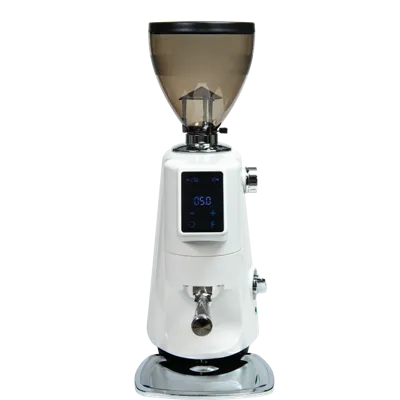
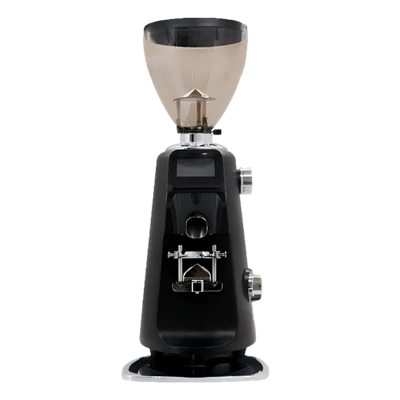
Choosing a commercial coffee grinder is one of the most important equipment decisions for any coffee business. The grinder influences extraction consistency, beverage quality, workflow efficiency, maintenance frequency, and operating costs every single day. A machine with impressive specifications may not perform well in a busy café if it cannot maintain stable grinding quality throughout continuous service.
Many buyers begin by comparing burr diameter, motor power, or grinding speed. These specifications are useful, but they do not explain how a grinder performs during real business operations. A better approach is to understand your production requirements first, then evaluate which grinding system matches your workflow.
This guide explains the key factors professional buyers consider before purchasing a commercial grinder. Whether you are sourcing from a Commercial Coffee Grinder Manufacturer, comparing a Commercial Coffee Grinder Supplier, or looking for an OEM Coffee Grinder Factory, these buying considerations will help you make a more informed decision.
Know Your Grinding Needs
The best commercial coffee grinder is not necessarily the one with the largest burrs or the highest motor power. It is the grinder that fits your daily production, beverage menu, and operating environment.
Professional buyers normally evaluate their business requirements before reviewing technical specifications.
1.Know Your Daily Coffee Volume
The first question should always be simple.
- How many cups will you prepare every day?
A small coffee bar producing fewer than one hundred espresso drinks each day has completely different requirements from a busy café serving several hundred beverages during morning and afternoon rush hours.
Choosing equipment that closely matches production demand improves efficiency while avoiding unnecessary investment.
Many buyers begin their comparison by reviewing different Commercial Coffee Grinders according to daily output instead of comparing specifications alone.
Businesses planning future expansion often select equipment with additional production capacity, allowing the grinder to continue supporting business growth without early replacement.
2.Grinding During Peak Hours
Average daily sales rarely reflect the real workload.
Coffee businesses normally experience short periods where orders arrive continuously.
The grinder may run for several hours with very little downtime.
During these busy periods, consistency becomes much more valuable than maximum grinding speed.
A professional grinder should maintain stable particle distribution from the first dose to the last without frequent adjustment.
Coffee shops preparing espresso throughout the day often compare Commercial Espresso Grinders designed specifically for continuous operation.
Equipment distributors supplying cafés and restaurant chains also pay close attention to performance stability because every location should produce the same grinding results.
3.Different Coffee Menus Require
Every coffee business operates differently.
Some cafés prepare only espresso-based drinks.
Others offer multiple espresso blends, decaffeinated coffee, seasonal beans, or signature beverages that require frequent grind adjustments.
Changing beans several times each day demands accurate adjustment and minimal coffee retention.
Businesses working with multiple recipes usually prefer Flat Burr Coffee Grinders that provide repeatable grinding performance across different coffee beans.
For companies building their own equipment brand, discussing OEM Coffee Grinder Solutions before production begins also makes future product development more efficient.
4.Workspace Should Never Be Ignored
Counter space directly affects workflow.
A grinder should fit naturally beside the espresso machine without interrupting drink preparation or slowing customer service.
Height, hopper capacity, adjustment access, and cleaning space all influence daily operation.
Compact models are suitable for limited workspaces, while larger cafés generally require equipment capable of supporting continuous production during peak service hours.
Businesses comparing medium and high-volume solutions often evaluate both 74mm Commercial Coffee Grinders and 83mm Commercial Coffee Grinders before making a final purchasing decision.
Planning the coffee station first often produces better results than selecting equipment based only on specifications.
5.Look Beyond the First Purchase
Buying commercial coffee equipment is rarely a one-time investment.
Coffee shops grow.
Distributors expand their product range.
Coffee equipment brands introduce new models.
Long-term cooperation becomes just as important as the first order.
Professional buyers normally evaluate production capacity, quality inspection, spare parts availability, delivery schedules, and customization services before confirming a supplier.
Working directly with an experienced Commercial Coffee Grinder Manufacturer helps simplify communication throughout future projects.
Many international buyers also prefer sourcing from a Coffee Grinder Factory in China because factory-direct cooperation often improves production flexibility for customized projects and bulk orders.
Burr Size Matters More Than Most Buyers Expect
Motor power appears on every specification sheet.
Professional buyers usually pay more attention to burr size.
The burr set directly influences particle distribution, grinding efficiency, heat control, and extraction consistency.
For commercial espresso preparation, flat burr grinders remain one of the most common choices because they provide uniform particle size and stable grinding performance throughout continuous operation.
Instead of asking which grinder has the most powerful motor, experienced buyers usually ask a different question.
- Which burr size best matches our daily production?
A 63mm flat burr grinder provides an excellent balance between compact size and commercial performance.
It is commonly selected by boutique cafés, independent coffee shops, bakeries, and restaurants preparing moderate volumes of espresso throughout the day.
Businesses looking for reliable daily performance often begin by comparing 63mm Commercial Coffee Grinders before moving to larger production models.
The smaller footprint also makes installation easier where counter space is limited.
As beverage volume increases, burr diameter becomes more important.
A larger grinding surface processes coffee beans more efficiently while maintaining stable particle distribution during continuous operation.
Busy cafés, hotel coffee bars, restaurant groups, and expanding coffee chains frequently choose 74mm Commercial Coffee Grinders because they provide an effective balance between production efficiency and grinding consistency.
Many equipment buyers also compare Automatic Commercial Coffee Grinders equipped with 74mm flat burrs when improving workflow efficiency.
Businesses with demanding production schedules require equipment that can maintain stable performance throughout long operating hours.
An 83mm flat burr system is commonly selected for high-volume cafés, specialty coffee chains, roasting laboratories, and professional training centers where consistency is expected from the first espresso shot to the last.
The advantage is not simply higher output. Larger burrs help maintain a more consistent particle distribution during continuous grinding, allowing baristas to spend less time making recipe corrections.
Many buyers comparing equipment for large-scale operations shortlist both 83mm Commercial Coffee Grinders and High Capacity Commercial Coffee Grinders before making their final decision.
Choosing burr size alone is not enough.
Two grinders equipped with the same burr diameter can produce very different grinding results.
Several factors influence overall grinding performance, including burr material, machining precision, alignment accuracy, motor stability, and the adjustment mechanism.
Professional buyers usually evaluate the complete grinding system rather than focusing on a single specification.
Businesses sourcing equipment for long-term distribution often request technical information from an experienced Commercial Coffee Grinder Supplier to better understand the design behind the grinder instead of comparing specification sheets alone.
Fast Grinding Doesn't Always Mean Better Performance
Grinding speed is one of the first specifications buyers compare.
Higher numbers often look attractive on paper.
Daily operation tells a different story.
A grinder producing coffee quickly but inconsistently creates more work for baristas throughout the day.
Recipe adjustments become more frequent.
Coffee waste increases.
Extraction becomes less predictable.
Professional buyers usually evaluate grinding quality first and production speed second.
Businesses comparing multiple models often review Automatic Commercial Coffee Grinders that balance grinding efficiency with stable particle consistency instead of simply pursuing faster output.
1.Heat Control Matters During Continuous Operation
Commercial grinders often operate continuously during busy service periods.
Stable heat management helps maintain more consistent grinding conditions over extended periods.
A well-designed flat burr system supports continuous production while helping maintain stable grinding performance throughout daily operation.
Coffee shops expecting heavy espresso demand frequently compare 74mm Flat Burr Coffee Grinders and 83mm Flat Burr Coffee Grinders according to their expected workload rather than focusing on motor power alone.
2.Retention Influences Workflow
Coffee retained inside the grinding chamber can affect recipe consistency when changing coffee beans.
Lower retention makes bean changes easier and reduces unnecessary coffee waste.
Businesses serving seasonal coffee, limited editions, or multiple espresso blends often pay close attention to grinder design during equipment selection.
Distributors developing their own equipment portfolio also evaluate Custom Coffee Grinder Solutions that match different customer requirements.
Look Beyond Technical Specifications
Specification sheets provide useful information.
Purchasing decisions require much more.
Professional buyers normally evaluate the complete cooperation process before placing bulk orders.
Important considerations include:
- Production capability
- Quality inspection procedures
- Spare parts availability
- Delivery lead time
- OEM and private label support
- Voltage customization
- Packaging options
- Technical documentation
- After-sales service
These factors often become more important than small differences in grinding speed or motor power.
Companies planning long-term cooperation usually communicate directly with a Commercial Coffee Grinder Manufacturer instead of purchasing through multiple intermediaries.
Businesses developing their own product line also benefit from working with an experienced OEM Coffee Grinder Manufacturer capable of supporting product customization, branding, and future expansion.