Buying a coffee grinder sounds simple until you start comparing them.
Burr size. Grinding capacity. Motor power. Hopper size. Grind adjustment. Dosing. Speed. Heat. Footprint.
Then the numbers start getting bigger, and it becomes easy to assume that the grinder with the larger burr, higher wattage or higher grinding capacity must be the better choice.
That is not how commercial coffee grinder selection works.
A grinder needs to match the way it will be used. A small café with a moderate daily workload does not necessarily need the same grinder as a busy coffee shop serving hundreds of espresso drinks. A restaurant may care more about simple operation and easy cleaning. A coffee chain may need consistent performance across multiple locations.
So instead of asking "What is the best coffee grinder?", start with a more useful question:
"What does my business actually need the grinder to do?"
This guide walks through the main factors to consider when choosing a commercial coffee grinder, with a practical focus on burr size, grinding volume, adjustment, dosing, hopper capacity, motor performance and daily workflow.
Understanding What You Need From a Coffee Grinder
The grinder sits between the coffee beans and the espresso machine, but its job is not simply to turn beans into powder.
The grinder needs to produce a usable and repeatable grind for the way the coffee will be prepared.
For a commercial operation, that means thinking about several things at the same time:
- How much coffee is ground each day?
- How much coffee is needed during busy periods?
- What brewing method is being used?
- How often will the grinder run?
- How important is dose consistency?
- How much counter space is available?
- How frequently will the grind setting need to be changed?
- How easy is the grinder to clean?
- Does the grinder need to support a commercial workflow?
These questions are more useful than choosing a machine based on appearance or one specification.
A grinder with a large burr may look impressive, but if the business does not need its output, the extra size may not provide a meaningful advantage.
A smaller commercial grinder may be the better fit when the workload, available space and workflow match it.
That is the starting point for choosing the right grinder.
There is no single specification that determines whether a grinder is good.
A commercial grinder should be looked at as a complete system.
The most important areas are:
- Burr size:The burr diameter affects the grinding system and is often associated with the grinder's intended workload.
- Grind consistency:The grinder needs to produce particles suitable for the intended brewing method and maintain repeatable results.
- Grinding capacity:The grinder should keep up with the amount of coffee the business needs to prepare.
- Motor:Motor power, speed and the overall grinding system need to work together.
- Grind adjustment:The operator needs enough control to dial in the required grind.
- Hopper capacity:The hopper should fit the amount of coffee being processed without creating unnecessary refilling work.
- Dosing:Timer, weighing and other control systems affect how easily the operator can repeat a dose.
- Heat management:Frequent grinding puts more demand on the motor and grinding system, making heat dissipation worth considering.
- Cleaning:A grinder used throughout the day should not be difficult to maintain.
The important point is that none of these specifications should be judged in isolation.

3.Start With Your Daily Grinding Volume
This is probably the most useful question to answer before comparing grinders.
How much coffee does the business actually grind?
You can estimate this from:
- Average daily coffee consumption
- Number of espresso drinks
- Average dose per drink
- Peak-hour orders
- Number of operating hours
- Number of baristas using the grinder
For example, a café that uses 5kg of coffee per day has a very different requirement from a location processing 20kg or more.
The daily number is useful, but peak-hour demand matters too.
A grinder might handle the total daily volume without difficulty while still becoming inconvenient during a busy service period if its output is too low.
So don't only ask:
How much coffee do we use per day?
Also ask:
How much coffee needs to be ground when the café is busiest?
That answer gives you a much better starting point.
4.Consider the Workload, Not Just the Maximum Capacity
Coffee grinder specifications often include a grinding capacity in kg/hour.
This is useful, but it should not be treated as the only number that matters.
A listed capacity is a reference for the grinder's intended output. Actual grinding performance can vary with factors such as:
- Coffee bean density
- Roast level
- Grind setting
- Feeding conditions
- Operating conditions
A buyer should therefore compare the expected workload with the grinder's listed capacity rather than choosing the model with the highest number.
For a moderate commercial workload, moving to a much larger grinder may add size and cost without solving an actual problem.
For a busy operation, choosing a grinder that is too small can create a bottleneck during service.
The right capacity is the capacity that matches your workflow.
Understanding Burr Size and Grinding Performance
This is where many buyers start comparing models.
Burr diameter is important, but bigger does not automatically mean better.
A 64mm commercial burr grinder and an 83mm commercial coffee grinder can both be useful. The question is where each configuration fits.
A smaller commercial burr configuration can make sense when the workload is moderate and counter space matters.
A larger burr configuration becomes more interesting when the grinder needs to support higher output and more frequent grinding.
The comparison should therefore look like this:
Workload → Required output → Burr configuration
Not:
Bigger burr → Better grinder
2.64mm Commercial Coffee Grinder: When Does It Make Sense?
A 64mm grinder can be a practical option for commercial users who need professional grinding performance without moving into a larger grinder configuration.
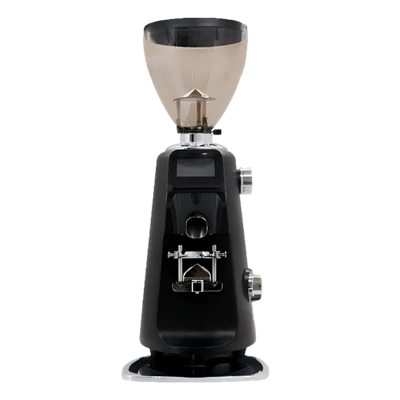
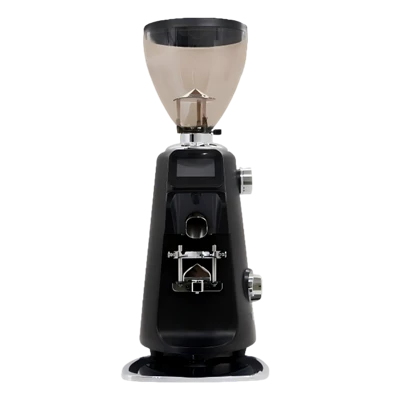
JieHui's JX-680MINI uses a 64mm flat burr, with a listed grinding capacity of 7–12kg/hour, a 350W / 1400RPM motor, timer control and a 0.5kg hopper in the listed standard configuration. The grinder supports 110–240V, 50/60Hz.
For buyers researching a 64mm commercial burr grinder, the detailed product configuration is available here:
**64mm Commercial Burr Grinder**
A 64mm configuration can make sense when:
- The café has a moderate grinding workload
- The grinder will be used regularly but does not need maximum output
- Counter space is limited
- A compact commercial configuration is preferred
- Timer-based dosing fits the workflow
- The business wants commercial equipment without unnecessarily moving to a larger grinder
- The JX-680MINI also has a listed footprint of 29.6 * 21.5 * 47.6cm, which makes machine dimensions another practical consideration for a crowded coffee counter.
The point is not that 64mm is the correct choice for every café.
The point is that 64mm can be enough when the workload does not justify a larger configuration.

3.83mm Commercial Coffee Grinder: When Should You Move Up?
An 83mm configuration becomes more relevant when grinding volume and operating frequency increase.
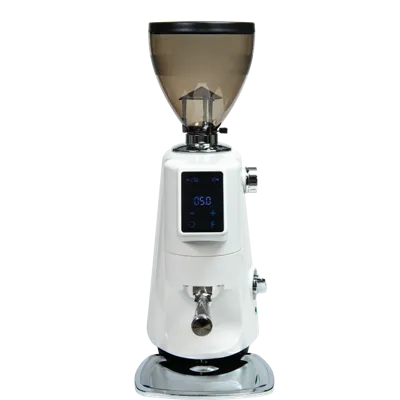
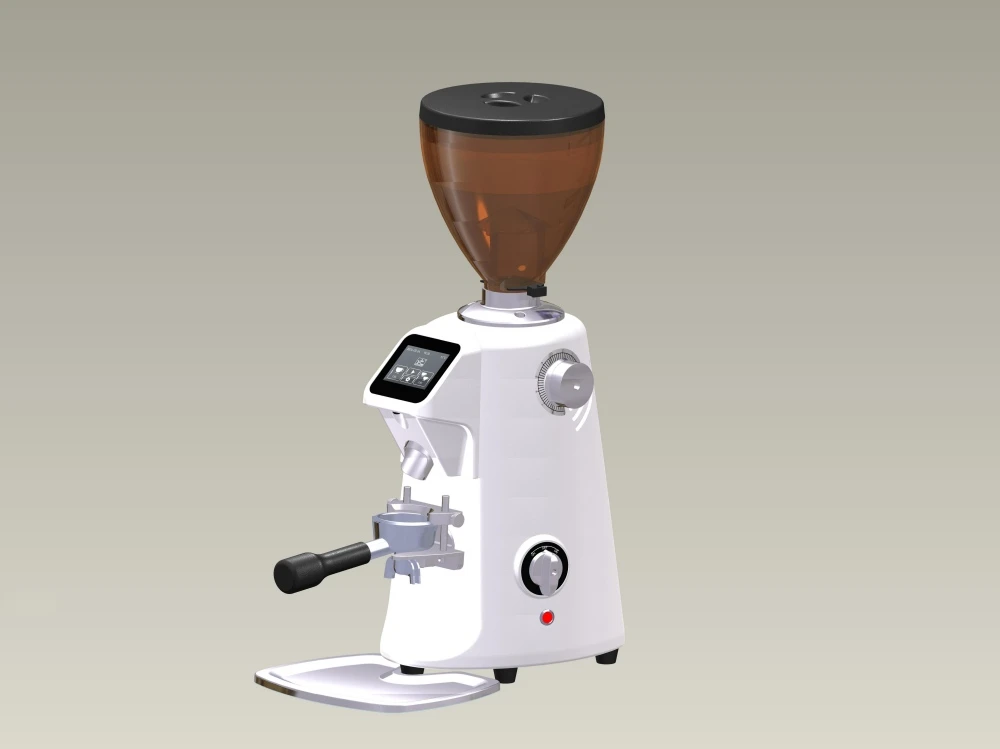
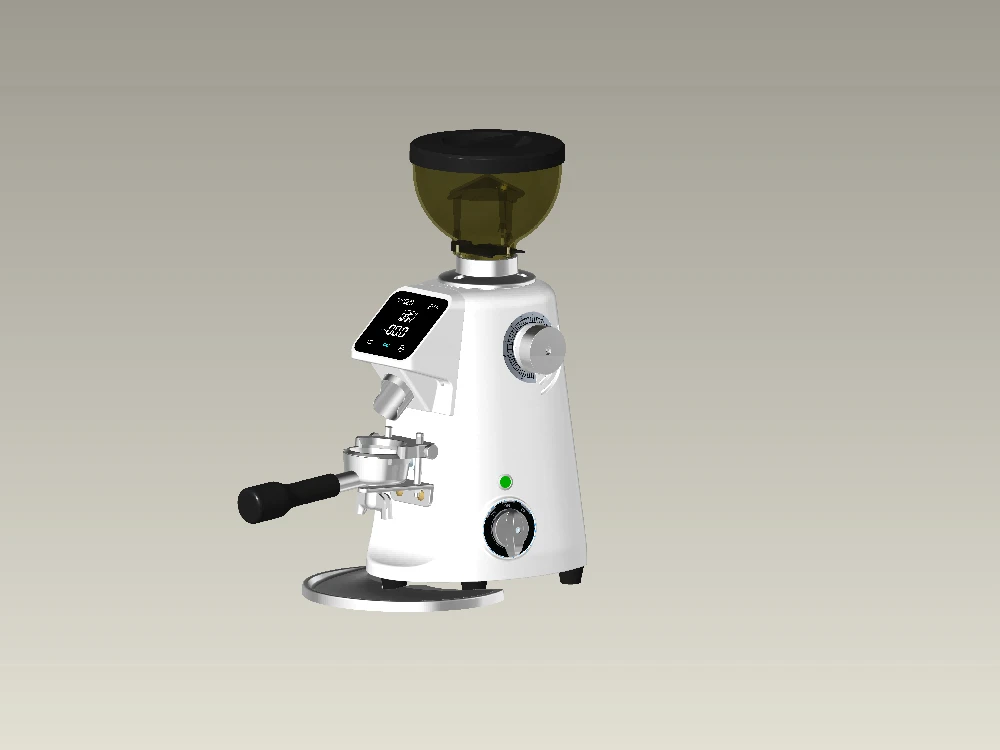
JieHui's JX-683P uses an 83mm flat burr, with a listed grinding capacity of 15–30kg/h, a 550W / 1400RPM motor, a 1.2kg bean hopper, time and weighing modes, a color touch screen and fan cooling. The model supports 110–240V, 50/60Hz.
For buyers looking specifically for an 83mm coffee grinder, the complete product specifications are available here:
An 83mm configuration can make sense when:
- Grinding volume is higher
- The grinder will operate frequently during service
- The café has busy peak periods
- Higher output is important
- A larger hopper is useful
- More dosing control is needed
- The working environment can accommodate a larger machine
The JX-683P lists a 1.2kg hopper, 15–30kg/h grinding capacity and 16kg net weight, so buyers should consider both its performance requirements and available counter space before ordering.
Again, the decision should come from the workload.
83mm is not simply "better." It is a different commercial configuration for a different level of demand.

4.64mm vs. 83mm Coffee Grinder: A Practical Comparison
| Factor | 64mm Commercial Grinder | 83mm Commercial Grinder |
|---|---|---|
| Burr size | 64mm flat burr | 83mm flat burr |
| Listed grinding capacity | 7–12kg/hour | 15–30kg/h |
| Motor | 350W / 1400RPM | 550W / 1400RPM |
| Hopper | 0.5kg listed configuration | 1.2kg |
| Control | Timer mode | Time / weighing mode |
| Display | Digital control | Color touch screen |
| Cooling | - | Fan cooling |
| Best starting point | Moderate commercial workload | Higher-volume commercial workload |
| Counter space | More compact | Larger footprint |
| Typical consideration | Regular café / commercial use | Busy, higher-frequency commercial use |
The specifications above are based on the listed JieHui configurations. Actual grinding results depend on the coffee beans, roast, grind setting and operating conditions.
The simple decision:
- Moderate workload → start by considering 64mm.
- Higher workload → start by considering 83mm.
- Limited counter space → check dimensions before capacity.
- Busy service → pay closer attention to output and workflow.
Grinding coffee is not simply about speed.
The particle distribution matters because the grind affects how water interacts with the coffee.
If the grind contains particles that are too coarse or too fine for the intended brewing method, extraction can become harder to control.
For commercial espresso preparation, repeatability is especially important.
The operator needs to be able to:
- Set the grinder
- Grind a dose
- Prepare the espresso
- Adjust the grind if needed
- Repeat the result
That makes the grind adjustment system an important part of grinder selection.
Different coffee beans and brewing conditions can require different grind settings.
A commercial grinder should give the operator enough adjustment to dial in the coffee.
Look at:
- Adjustment range
- Adjustment mechanism
- Markings
- Ease of adjustment
- Repeatability
The JX-683P, for example, uses a metal adjustment dial with a 0–9 scale for grind adjustment.
This type of information is more useful to a buyer than simply seeing the phrase "professional grinder."
The question should always be:
Can the operator make the adjustment needed for the coffee being served?

Check the Grinder's Core Specifications
A larger hopper means more coffee can be loaded before refilling.
That can be useful in a busy café.
But hopper size should match the operation.
A smaller hopper can be useful when:
- Coffee consumption is moderate
- Different beans are used regularly
- The grinder needs to fit on a compact counter
- Staff prefer to refill smaller quantities
A larger hopper can be useful when:
- The grinder operates frequently
- Coffee consumption is high
- Refilling during peak service is inconvenient
- One bean is used for a large number of drinks
- For this reason, hopper capacity should be evaluated together with daily consumption.
A larger hopper does not automatically improve grinding quality.

Motor power is another specification that can easily be misunderstood.
A 550W grinder is not automatically twice as capable as a 275W grinder.
Motor power needs to be considered with:
- Burr diameter
- Motor speed
- Grinding system
- Grinding capacity
- Duty cycle
- Heat management
The purpose of looking at motor power is to understand whether the grinder configuration is suitable for the expected workload.
It should not be used as a standalone ranking number.
Grinding generates heat.
For a business that grinds coffee occasionally, this may not be a major purchasing concern.
For a busy commercial operation, repeated grinding puts more demand on the motor and grinding system.
This is where buyers should look at the complete thermal design.
Consider:
- Motor operation
- Grinding frequency
- Burr configuration
- Airflow
- Cooling system
- Expected workload
The 83mm JX-683P lists fan cooling as part of its configuration.
That does not mean every 83mm grinder needs the same cooling system.
It means that heat management becomes a more relevant specification as the workload increases.
A grinder can be fast and powerful, but the workflow still matters.
The operator needs to control how much coffee is dispensed.
Common approaches include:
- Timer dosing
- Single-dose operation
- Double-dose settings
- Weight-based dosing
A simple timer may be enough for some commercial applications.
A weighing mode can be useful when dose control is a higher priority.
The JX-680MINI lists timer mode, while the JX-683P lists both time and weighing modes.
That creates a practical distinction between the two configurations.

The grinder should deliver the grounds into the working area without creating unnecessary mess.
Look at:
- Powder outlet design
- Portafilter support
- Powder scattering
- Retention
- Cleaning around the outlet
This matters during busy service because small workflow problems are repeated many times every day.
A clean and direct powder path can make dosing easier and keep the working area more manageable.
The JX-683P uses a direct powder outlet and built-in portafilter support as part of its design.

Match the Grinder to Your Commercial Application
A home grinder and a commercial grinder may both grind coffee beans, but the intended workload is different.
| Factor | Home Coffee Grinder | Commercial Coffee Grinder |
|---|---|---|
| Typical workload | Lower | Higher |
| Operating frequency | Occasional | Frequent |
| Grinding capacity | Usually lower | Higher options |
| Hopper options | Smaller | Larger options |
| Motor requirements | Household use | Commercial workload |
| Workflow | Individual user | Barista / staff |
| Duty cycle | Lower | More demanding |
| Application | Home brewing | Café, restaurant, hotel, commercial service |
If the grinder will be used repeatedly throughout a working day, a commercial configuration deserves consideration.
The mistake is choosing based only on whether a grinder can physically grind coffee.
The better question is:
Can it support the workload without becoming the bottleneck?
Different businesses have different requirements.
For Small Cafés
Focus on:
- Moderate grinding volume
- Compact footprint
- Easy adjustment
- Simple dosing
- Easy cleaning
A 64mm commercial grinder may be worth considering when the workload falls within its listed capacity.
For Busy Coffee Shops
Focus on:
- Grinding capacity
- Peak-hour output
- Hopper capacity
- Dosing control
- Heat management
- Workflow
An 83mm configuration can be considered when the required output is higher.
For Restaurants
Focus on:
- Simple operation
- Reliable daily use
- Easy cleaning
- Suitable capacity
- Counter space
The restaurant may not need the highest-output grinder available.
For Hotels
Look at:
- Daily consumption
- Breakfast-service workload
- Staff operation
- Hopper capacity
- Maintenance
The grinder needs to fit the hotel's actual coffee-service pattern.
For Coffee Chains
The selection process should consider:
- Workload
- Repeatability
- Standardized configuration
- Ease of operation
- Electrical requirements
- Maintenance
The same grinder configuration may be used across locations when the operating requirements are similar.

A 64mm commercial grinder deserves consideration when the business needs a compact professional grinder for a moderate workload.
It can be a practical choice when:
- Daily grinding volume is moderate
- Peak-hour demand is manageable
- Counter space is limited
- Timer dosing is sufficient
The business does not need the output of a larger grinder
JieHui's JX-680MINI provides a 64mm flat burr, 7–12kg/hour listed grinding capacity and adjustable grinding settings.
See the 64mm Commercial Burr Grinder specifications
An 83mm commercial coffee grinder becomes more relevant when the workload increases.
Consider this configuration when:
- Grinding is frequent
- Peak-hour demand is high
- Higher output is required
- A larger hopper is useful
- More dosing control is needed
- The counter can accommodate a larger machine
The JX-683P lists an 83mm flat burr, 15–30kg/h grinding capacity, 1.2kg hopper, 550W motor, time/weighing modes and fan cooling.
Avoid Common Coffee Grinder Buying Mistakes
This is one of the easiest mistakes to make.
A larger commercial grinder can have:
- Larger burrs
- Higher listed capacity
- Larger hopper
- More powerful motor
- More control features
That does not mean all of those features are necessary for every business.
If a café only needs moderate grinding capacity, a larger machine can introduce unnecessary:
- Counter space requirements
- Equipment cost
- Weight
- Capacity
The goal is not to own the biggest grinder.
The goal is to have enough grinder for the work.
- Choosing the biggest burr without checking workload:Bigger is not a substitute for proper capacity planning.
- Looking only at motor wattage:Motor power is only one part of the grinding system.
- Looking only at maximum grinding capacity:A maximum number does not tell you whether the machine fits your actual workflow.
- Ignoring peak-hour demand:Daily volume alone may underestimate the grinder's real workload.
- Choosing a home grinder for repeated commercial use:Commercial operation requires a different workload expectation.
- Ignoring counter space:Check the machine dimensions before ordering.
- Ignoring grind adjustment:A grinder needs to provide enough control for the intended coffee preparation.
- Choosing based only on appearance:A grinder can look professional without being the right configuration for the operation.
- Buying more capacity than necessary:Extra capacity has value only when the business actually uses it.
- Focusing only on purchase price:The better comparison is the complete equipment fit: capacity, workflow, maintenance and expected usage.
This sounds like a small detail.
It is not.
Commercial coffee counters can become crowded quickly.
Before selecting a grinder, measure:
- Width
- Depth
- Height
- Space above the hopper
- Space around the grinder
- Position of the espresso machine
- Barista working area
A grinder needs enough space for operation and maintenance, not just enough space to physically stand on the counter.
For example, the listed JX-680MINI dimensions are 29.6 * 21.5 * 47.6cm, while the JX-683P is listed at 40 * 25 * 66.5cm.
That difference can matter when planning a compact commercial counter.
What Should You Check Before Buying?
Use this checklist before making the final decision.
1.Workload
☐ Daily coffee consumption
☐ Peak-hour demand
☐ Expected grinding frequency
2.Grinding System
☐ Burr diameter
☐ Burr type
☐ Grinding capacity
☐ Grinding consistency
☐ Burr lifetime
3.Operation
☐ Grind adjustment
☐ Dosing method
☐ Hopper capacity
☐ Powder outlet
☐ Portafilter support
4.Machine
☐ Motor power
☐ Heat management
☐ Machine dimensions
☐ Cleaning access
☐ Maintenance requirements
5.Installation
☐ Voltage
☐ Frequency
☐ Plug
☐ Counter space
This gives you a much clearer basis for comparing commercial coffee grinders than price or appearance alone.
A Simple 64mm vs. 83mm Decision Guide
If you are still unsure, use this simplified approach.
1.Choose 64mm when:
Your priority is a moderate commercial workload + compact equipment.
- Small or medium café
- Moderate coffee consumption
- Regular espresso service
- Limited counter space
- Standard timer-based workflow
2.Choose 83mm when:
Your priority is higher output + frequent commercial grinding.
- Busy café
- Higher coffee consumption
- Frequent grinding
- Larger hopper requirement
- Higher-output commercial workflow
- More dosing control
- There is no universal winner.
The right choice depends on the amount of work the grinder needs to handle.
What If You Are Buying Commercial Coffee Grinders in China?
For a café buying one machine, product specifications may be the main concern.
For a distributor, wholesaler or private-label buyer, there is another layer to the decision.
You may need to confirm:
- Product configuration
- MOQ
- Sample availability
- Packaging
- Logo customization
- Electrical configuration
- Lead time
- Spare parts
- Certification
- Repeat-order capability
If the project involves your own coffee equipment brand, OEM coffee grinder service can be useful because the buyer can start with an existing grinder platform and customize agreed brand elements rather than developing an entirely new grinder.
JieHui's commercial grinder pages list OEM support covering areas such as logo, appearance and packaging customization.
For this type of project, the important point is still the same:
Choose the grinder configuration first. Discuss customization second.
Coffee Grinder Buying Guide: Quick Answers
1.What is the best commercial coffee grinder?
There is no single best model for every commercial application. The right grinder depends on workload, grinding capacity, burr size, grind adjustment, dosing, hopper capacity, available space and daily workflow.
2.Is a 64mm coffee grinder enough for a café?
It can be, depending on the café's workload. A 64mm commercial grinder can be suitable for moderate commercial grinding requirements. Check the expected daily and peak-hour volume before making the decision.
3.Is an 83mm coffee grinder better than a 64mm grinder?
Not automatically. An 83mm grinder can make more sense when higher grinding capacity and frequent operation are required. A 64mm grinder may be the better fit for a moderate workload.
4.What burr size should I choose for a commercial coffee grinder?
Start with workload rather than burr size. Determine how much coffee needs to be ground, especially during peak hours, then compare the burr configurations that can support that workload.
5.Does a larger burr mean better coffee?
Not by itself. Burr size is only one factor. Grind consistency, adjustment, motor performance, coffee beans and operating conditions all affect the final result.
6.How much coffee can a commercial coffee grinder grind?
It depends on the model and operating conditions. For example, JieHui lists 7–12kg/hour for its 64mm JX-680MINI and 15–30kg/h for its 83mm JX-683P. (绍兴杰辉电器)
7.What is the difference between a commercial and home coffee grinder?
The main difference is the intended workload and operating environment. Commercial grinders are designed around more frequent use, higher output requirements and professional workflows.
8.What should I consider besides burr size?
Look at grinding capacity, motor, grind adjustment, hopper size, dosing, heat management, powder output, machine dimensions and cleaning requirements.
9.How do I choose a coffee grinder for a busy café?
Start with peak-hour grinding demand. Then compare grinding capacity, burr size, motor, hopper capacity, dosing and heat management. An 83mm commercial configuration may be worth considering when higher output is required.
10.Can I buy an OEM coffee grinder for my own brand?
Yes, OEM can be an option for coffee equipment brands, distributors and wholesalers that want to customize an existing commercial grinder platform with agreed branding, appearance or packaging requirements.
The Bottom Line: Choose the Grinder Around the Work
Choosing a coffee grinder becomes much easier once the buying process is put in the right order.
Don't start with:
"Which grinder is the biggest?"
Don't start with:
"Which grinder has the highest wattage?"
And don't start with:
"Which grinder looks the most professional?"
Start here:
1. How much coffee do you grind?
Determine the daily volume.
2. How much coffee do you grind during peak periods?
This tells you whether your grinder could become a bottleneck.
3. What grind control do you need?
Consider adjustment, dosing and repeatability.
4. How much counter space is available?
Check the actual machine dimensions.
5. Which burr configuration matches the workload?
This is where 64mm and 83mm become meaningful choices.
6. What does the daily workflow require?
Consider hopper size, powder output, dosing and cleaning.
7. Are you buying for your own café or for resale?
If you are a distributor, wholesaler or private-label buyer, add OEM, packaging, MOQ and repeat-order requirements to the purchasing checklist.
For a moderate commercial workload, a 64mm commercial burr grinder can be a sensible starting point.
For higher-volume commercial grinding, an 83mm coffee grinder can provide a more suitable configuration.
✅ JieHui offers both configurations, allowing buyers to compare the two based on actual workload rather than choosing simply by burr size. The listed 64mm JX-680MINI is positioned around a 7–12kg/hour capacity, while the 83mm JX-683P is listed at 15–30kg/h.