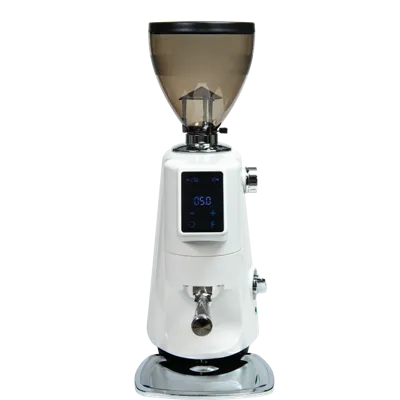
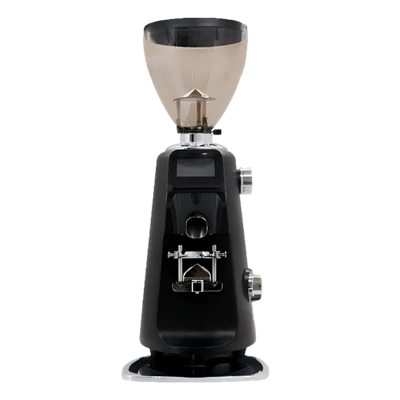
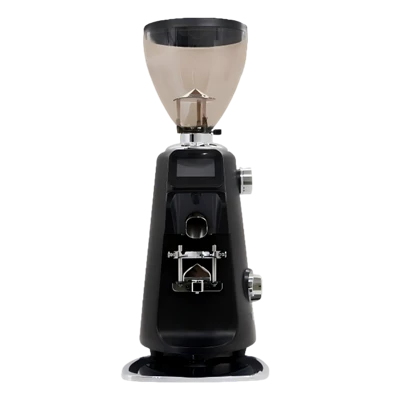
In recent years, whether you're building a coffee brand, running an e-commerce business, or finding a supply chain for overseas clients, you'll almost always encounter one category-coffee grinders. You can take your time choosing a coffee machine, but if the grinding process isn't done well, even the best beans will be wasted.
China's coffee grinder industry is actually very mature. From basic manual grinders to home electric grinders and commercial-grade grinders, the supply chain is complete, and there are many choices. Many foreign brands, ostensibly "domestic brands," actually source their products in China.
This article is a compilation and sharing, not an industry ranking or an official recommendation. It simply lists some Chinese coffee grinder suppliers that I've encountered, researched, or that are commonly found in the market, for reference by those who need it.

Top 10 Custom Coffee Grinder Manufacturer In China
Jiehui Electric
Located in Shaoxing, Zhejiang, China, the company specializes in coffee grinder manufacturing with years of industry experience. It operates stable production lines and a complete quality control system to ensure reliable mass production.
Our main products include: customized commercial coffee grinders, customized home coffee grinders, customized single-dose coffee grinders, customized automatic coffee grinders, customized semi-automatic coffee grinders, and customized coffee grinder accessories.
Approximately 80% of the products are exported to overseas markets, including Europe, North America, and Asia. The company offers professional OEM/ODM services and stable international delivery capability.
With long-term focus on coffee grinding technology, the company stands out in product consistency, reliability, and customization. Strong manufacturing capability and international market experience support long-term global partnerships.
BrewMaster Technology
This type of manufacturer is typical, specializing in mid-to-high-end customized home electric coffee grinders. Their clients are mostly overseas brands. The products are generally reliable; the specifications aren't overly exaggerated, but they excel in fundamental aspects like grinding consistency and motor lifespan.
If you're serious about building a long-term brand, rather than just chasing low prices, this type of supplier would be suitable.
AromaCore Manufacturing
AromaCore is more like a traditional manufacturing company, with solid workmanship and a stable style. Customized commercial coffee grinders are their focus, and many cafes and roasting studios use similar configurations.
If you don't prioritize a particularly trendy appearance but value durability and stability, this type of factory offers more peace of mind.
BeanCraft pays more attention to design, and their designs usually align with European and American aesthetics. They excel at OEM/ODM, able to adjust the structure and details according to the brand.
Many new brands, in their initial stages, seek partnerships with factories that can "make changes as they go," offering relatively high flexibility.
This is a typical "integrated manufacturing and trading" manufacturer, handling almost everything from parts to complete machine assembly in-house. Their advantages are strong cost control and relatively stable delivery times.
If your order volume is gradually increasing and you are sensitive to both price and delivery time, this type of manufacturer is worth considering.
PureBurr's selling point is clear-the burr. They emphasize details such as burr material, grind uniformity, and powder consistency, making them popular with serious coffee enthusiasts.
Suitable for content-driven brands that emphasize "professionalism" and "transparent specifications."
Manufacturers like DailyGrind understand "what ordinary consumers want." Their products are simple to operate, easy to clean, and while not overly complex in function, they include all the essential features.
If your target users are everyday home users rather than coffee enthusiasts, these products will sell better.
UrbanBean Manufacturing
UrbanBean has a youthful style with a wide range of colors and designs, making it ideal for gift sets or collaborations.
Many attractive coffee grinders on social media are often supported by factories like this one.
ProMill Equipment
As the name suggests, this company focuses on a more professional approach. Their products prioritize performance, lifespan, and consistency over portability.
Suitable for coffee shops, roasters, and other commercial channels, or for targeting a high-end niche market.
NovaGrind Industry
NovaGrind's strength lies in its high level of cooperation. They are very accommodating with customized packaging, certification documents, and small-batch trial orders.
For newcomers to the Chinese supply chain, this manufacturer can save significant communication costs.
What are the main advantages of a coffee grinder?
In short: The value of a grinder is often not determined by its initial performance, but by its long-term stability.
For coffee grinder buyers, several advantages are particularly important:
● Stable grind output: It's not just about one machine grinding well, but about a batch of machines performing consistently well, making it suitable for bulk delivery.
● High durability: In commercial or semi-commercial settings, continuous use is the norm, making the robustness of the motor and burr structure crucial.
● High efficiency: Grinding speed, residual powder control, and ease of cleaning all affect the actual user experience.
How to Assess Performance? Don't Just Look at the Specifications
Many performance issues cannot be identified from the specifications sheet.
Customized automatic coffee grinders prioritize these aspects:
● Does performance change during continuous grinding?
● Does the grind output decrease after three or six months of use?
● How significant are the differences between different batches and different machines?
This is why experienced grinder manufacturers have an advantage in long-term partnerships.
Customized Fully Automatic Coffee Grinders vs. Customized Semi-Automatic Coffee Grinders.
These two types of grinders are not fundamentally different in terms of "high-end" or "low-end," but rather in their intended use.
Customized Fully Automatic Coffee Grinders:
● Fixed operating procedures
● More standardized powder output
● Lower reliance on operators
Commonly found in:
Chain coffee shops, office coffee systems, hotel channels
However, note that fully automatic grinders require high stability in their electronic systems and programs, placing greater emphasis on the supplier's capabilities.
Semi-Automatic Coffee Grinders:
● Greater manual adjustment options
● Relatively simple structure
● Lower maintenance costs
More common in:
Specialty coffee shops, roasters, professional users
Why Grinding is a Core Step in Coffee Making
Whether you use pour-over, French press, espresso, or a moka pot, the essence is extracting flavor through the contact of hot water and coffee grounds. The uniformity of the grind size directly affects the balance of extraction.
If the grind size varies too much, some beans will be over-extracted while others will be under-extracted, resulting in a bitter, astringent, or hollow flavor.
Therefore, many coffee professionals say: a good grinder can save ordinary beans; a bad grinder will waste good beans.
How Much Does the Cutter Type Affect Grinding?
In the core structure of a grinder, the cutter head almost determines everything. Currently, there are two main types:
● Flat Cutter
● Conical Cutter
Flat cutters produce a relatively concentrated particle distribution and a clean flavor, but they require high precision in the motor and assembly, resulting in higher costs.
Conical cutters are more common, offering a relatively stable grinding process and a wide range of applications, commonly used in both home and commercial settings.
For most ordinary users, the cutter head type isn't crucial; the material, machining precision, and overall machine stability are more important.
The Importance of Grinding Coarseness Adjustment
A good grinder must possess stable and repeatable coarseness adjustment capabilities.
It's not just about being able to adjust, but about ensuring that after adjustment, it returns to the same setting next time.
Pump-over, Italian, and French press grinders have completely different requirements for grinding coarseness. If the settings are mislabeled or the return to the original setting is inaccurate, using it will be extremely frustrating. This is why many low-priced
grinders have impressive specifications but a poor actual user experience.
Noise and Stability Are Often Underestimated
Many people focus only on the burr and motor power when purchasing a grinder, neglecting noise control and overall machine stability.
In reality, these two factors significantly impact the daily user experience.
A stable machine structure and a well-designed vibration damping system not only reduce noise but also help extend the machine's lifespan. This difference becomes increasingly apparent over long-term use, especially with electric grinders.
Why do Chinese coffee grinder manufacturers have such a high market share in this category?
Realistically, China's advantages in the coffee grinder sector mainly stem from three aspects:
● A complete small appliance supply chain
●Mature metal processing and motor manufacturing capabilities
●Strong OEM/ODM experience
Many overseas brands are more like product definers and channel operators, while the actual product implementation is often handled by Chinese factories.
What's more important than price when choosing a supplier?
Price is certainly important, but it's not the only factor.
In actual cooperation, many problems arise in the details, such as:
● Batch stability
● Communication efficiency
● Attitude towards feedback on issues
Some factories offer high prices but rarely require rework; some factories offer very low prices but have extremely high hidden costs. These are things you can only truly understand through actual cooperation.