In the coffee industry, most conversations still revolve around beans, roasting profiles, and extraction techniques. But for companies operating in B2B markets-distributors, café chains, private-label brands, and equipment buyers-there is another factor that quietly determines success or failure: the automatic coffee grinder supplier behind the product.
A grinder is not just a supporting tool. In commercial and semi-commercial environments, it directly affects workflow efficiency, beverage consistency, maintenance costs, and ultimately customer satisfaction. When scaled across dozens or hundreds of locations, even small weaknesses in grinder performance can become serious operational problems.
The Shift: From Product Purchasing to Supplier Selection
A few years ago, many buyers approached grinders as standalone products. Price, basic specifications, and delivery time were often enough to close a deal. That approach no longer works.
Today's B2B buyers are more cautious. They look beyond the machine itself and evaluate the supplier's ability to support long-term business growth. This shift is driven by real-world experience: inconsistent quality, unstable supply chains, and lack of after-sales support have cost many companies far more than they initially saved on procurement.
Choosing an automatic coffee grinder supplier has become a strategic decision, not a transactional one.
Why Automatic Grinders Matter More in B2B Settings
Automatic coffee grinders operate under very different conditions than home-use equipment. In cafés, offices, hotels, and retail chains, grinders must handle:
● High daily usage
● Operators with varying skill levels
● Limited maintenance time
● Tight workflow requirements
When a grinder fails to perform consistently, the consequences are immediate. Uneven grinding leads to unstable extraction. Poor adjustment mechanisms cause staff confusion. Weak internal components shorten service life. All of these issues translate into customer complaints, training inefficiencies, and unexpected costs.
That is why B2B buyers increasingly focus on the reliability of the supplier, not just the feature list of the machine.
What a Strong Supplier Really Brings to the Table
Consistency Across Batches
For distributors and brand owners, batch-to-batch consistency is critical. A grinder that performs well in one shipment but slightly differently in the next creates problems that are difficult to explain to customers.
Established suppliers with in-house manufacturing and quality control systems are far better positioned to deliver consistent products. They understand tolerances, component sourcing, and assembly processes in a way that trading companies often do not.
Practical Design, Not Just Specifications
On paper, many grinders look impressive. In real-world use, details matter more:
1.Is the grind adjustment intuitive?
2.Can the machine handle long operating hours without overheating?
3.Is cleaning straightforward for daily staff routines?
Suppliers with real manufacturing and market experience tend to design grinders around actual usage scenarios, not just technical benchmarks.
Flexibility for Different Markets
B2B buyers rarely sell into a single market. Noise standards, electrical requirements, design preferences, and certification rules vary widely across regions.
A capable automatic coffee grinder supplier can adapt existing models for different markets without compromising performance or causing long lead times. This flexibility is especially valuable for OEM and private-label customers.
Long-Term Support and Communication
Equipment issues are inevitable. What matters is how they are handled.
Suppliers who provide clear documentation, spare parts support, and responsive communication reduce downtime and protect their partners' reputations. Over time, this reliability builds trust that goes far beyond a single purchase order.
An Industry Reality: Cheap Equipment Is Often Expensive
Many B2B buyers learn this lesson the hard way. A low-priced grinder may look attractive initially, but hidden costs appear quickly:
● Higher failure rates
● Increased warranty claims
● Lost customers due to inconsistent results
● Reputational damage in competitive markets
As a result, more companies are shifting toward suppliers that offer balanced value-reasonable pricing combined with proven durability and technical support.
Jiehui Coffee: The Best Coffee Grinder Manufacturers
Against this backdrop, manufacturers with long-term focus and production expertise are gaining attention. Jiehui Coffee is one such example.
Originating from a manufacturing base established in 2007, Jiehui Coffee has developed its business around the design and production of coffee grinders rather than short-term trading. This foundation allows the company to control key aspects of product quality, from component selection to final assembly.
Some characteristics that B2B buyers value include:
● Manufacturing experience that supports stable, repeatable production
● A dedicated team involved in product development and quality control
● Export experience across multiple international markets
● OEM and ODM capability, enabling customization for different brands and channels
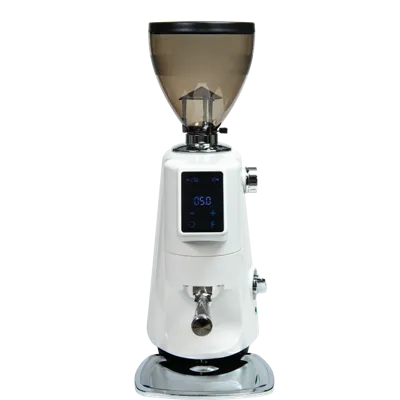
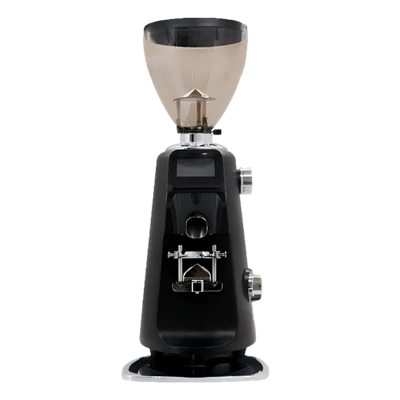
Jiehui Coffee's product range includes automatic coffee grinders and single-dose grinders designed for commercial and semi-commercial use. The company works with partners who are looking for long-term cooperation rather than one-off transactions.
More information about the company can be found at:www.jiehuicoffee.com
Why Supplier Choice Shapes Long-Term B2B Outcomes
In competitive coffee markets, margins are often thin and customer expectations are high. Businesses cannot afford unstable equipment or unreliable supply partners.
A strong automatic coffee grinder supplier helps B2B companies by:
● Reducing operational risk
● Supporting consistent product performance
● Enabling scalable growth
● Strengthening brand credibility
● Over time, these advantages compound. What begins as a technical decision becomes a business advantage.
Final Thoughts
Automatic coffee grinders may not be the most visible part of a coffee business, but they are among the most influential. For B2B companies, success depends not only on the machines they sell or use, but on the partners they choose behind the scenes.
Selecting the right automatic coffee grinder supplier is ultimately about aligning with a company that understands products, markets, and long-term collaboration. In an industry where consistency and trust matter, that choice can make all the difference.