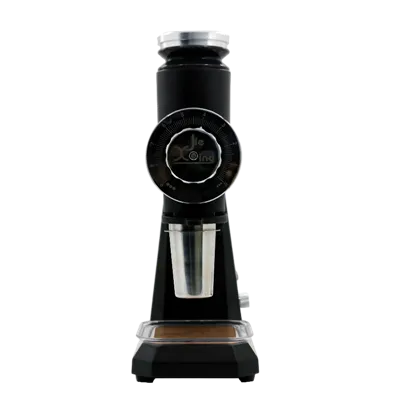
China's coffee equipment industry has developed fast over the past few years.
From burr systems and motors to complete machine assembly, the supply chain is far more mature than before. More overseas buyers are now sourcing coffee grinders from China, not only because of cost advantages, but because factories are able to support large-volume production, OEM projects, and stable long-term supply.
For serious buyers, choosing a supplier is no longer just about getting a low quotation.
What really matters is whether the factory can handle repeat orders, maintain consistent quality, and support business growth over time.
The manufacturers below are widely recognized in the market for production capability, export experience, and OEM support.
| Manufacturer | Main Products | OEM/ODM | Main Buyers | Factory Strength |
|---|---|---|---|---|
| Jiehui Electric | Coffee grinder & coffee machine | Yes | Importers, distributors, brand owners | Large-scale manufacturing |
| Feima | Commercial coffee grinder | Limited | Coffee shops | Grinding specialization |
| HeyCafe | Espresso grinder | Yes | Commercial distributors | Stable grinding system |
| WPM | Coffee grinder & espresso equipment | Yes | Premium coffee brands | Product consistency |
| Latumab | Home coffee grinder | Yes | E-commerce sellers |
Flexible OEM production |
1. Jiehui Electric
When buyers start looking for a coffee grinder manufacturer in China, many focus on pricing first.
That changes quickly once production begins.
A factory that can make a good sample is not always a factory that can manage large-volume orders consistently. Problems usually appear after production scales up:
- unstable lead times
- inconsistent product quality
- motor variation between batches
- delayed replenishment
- increasing after-sales issues
For large importers and commercial buyers, those problems cost far more than a slightly higher unit price.
Jiehui Electric stands out because it is built for volume production and long-term cooperation.
The company works with:
- coffee equipment importers
- commercial distributors
- private label brands
- chain store buyers
- large e-commerce sellers
- regional wholesalers
Most of these customers are not placing one-time orders. They need a factory that can continue supporting them months and years later.
That requires a stable manufacturing system.
Strong Production Structure
Many suppliers in the market mainly focus on assembly.
Components come from different vendors, and the final product is put together before shipment. Small orders may run smoothly, but once order quantities increase, consistency becomes difficult to control.
Jiehui Electric operates with a more complete production structure.
The company covers:
- product development
- mold production
- injection molding
- metal processing
- motor assembly
- product testing
- final assembly
For buyers, this means more control over production quality and delivery schedules.
Large-volume customers usually care about one thing most: stability.
Especially during peak seasons.
Better Fit for Large OEM Projects
Private label coffee equipment has become increasingly common.
Many buyers are building their own brands instead of selling generic products. That means suppliers must support customization efficiently.
Jiehui Electric has experience handling:
- custom logo projects
- packaging development
- voltage customization
- color customization.
- structure modifications
- OEM and ODM requests
This matters because product development rarely stays unchanged from beginning to end.
Packaging gets revised. Colors change. Accessories get upgraded. Different markets require different specifications.
Factories that respond slowly often delay the entire project.
For buyers managing multiple SKUs or expanding product lines, response speed becomes extremely important.
More Suitable for Long-Term Volume Orders
Some factories are comfortable with small orders but struggle once monthly quantities increase.
This is where manufacturing capability becomes visible.
Jiehui Electric is more aligned with long-term volume business.
That includes buyers such as:
- commercial coffee equipment distributors
- regional importers
- chain coffee brands
- appliance wholesalers
- large Amazon sellers
These buyers need consistent replenishment, not just one shipment.
In the coffee equipment business, repeat orders are often more important than the first order.
A supplier that cannot maintain production consistency eventually creates supply chain risk.
Export Experience Matters
Many factories can manufacture products.
Not every factory understands international purchasing requirements.
Buyers in Europe, the Middle East, and Southeast Asia usually pay close attention to:
- certification
- packaging standards
- inspection procedures
- export documentation
- voltage requirements
- shipping coordination
Jiehui Electric has years of export experience in overseas markets and is familiar with these processes.
For importers, that reduces communication problems and helps projects move faster.
Feima
Feima has built a solid reputation in the commercial coffee grinder market.
The company focuses heavily on grinding performance and continuous operation.
Many coffee shop buyers evaluate factors such as:
- grinding consistency
- burr durability
- motor performance
- stability during long working hours
Feima performs well in commercial environments where grinders operate continuously throughout the day.
Its products are commonly seen in cafés and specialty coffee shops across Asia.
HeyCafe
HeyCafe is well known in the espresso grinding segment.
The company focuses more on commercial espresso applications and stable output performance.
For chain coffee businesses, consistency between locations is critical.
If grinders perform differently from store to store, coffee extraction becomes inconsistent as well.
HeyCafe has experience supporting commercial operations that require stable grinding performance over long working periods.
WPM
WPM is positioned more toward the premium coffee equipment market.
Its products are known not only for functionality, but also for design and presentation.
Many specialty coffee shops pay attention to equipment appearance because grinders are often visible to customers at the coffee bar.
WPM products fit well in premium café environments where visual presentation matters alongside performance.
Latumab
Latumab is active in the home coffee grinder segment, especially in e-commerce projects.
The company is more flexible with:
- smaller batch orders
- packaging changes
- accessory adjustments
- color updates
That flexibility is useful for online sellers and startup brands where product updates happen frequently.
Many Amazon sellers and small private label brands prefer suppliers that can adapt quickly during product revisions.
What Buyers Usually Look for When Choosing a Coffee Grinder Factory
Product Consistency
Making a good sample is easy.
Maintaining the same quality across thousands of units is much harder.
Commercial buyers pay close attention to consistency between production batches.
Motor Quality
Many after-sales problems come from motor instability.
Buyers usually test:
- overheating
- grinding speed stability
- operating noise
- long-hour performance
Reliable motors are critical for commercial grinders.
Burr Precision
Grinding consistency directly affects coffee extraction.
This becomes especially important in espresso applications and commercial coffee shops.
OEM Capability
More buyers now build their own coffee equipment brands.
That means suppliers must support:
- private label production
- packaging customization
- logo printing
- voltage adaptation
- product modifications
Factories with stronger OEM support are usually preferred for long-term cooperation.